

Icaro Of The Unseen Dharma
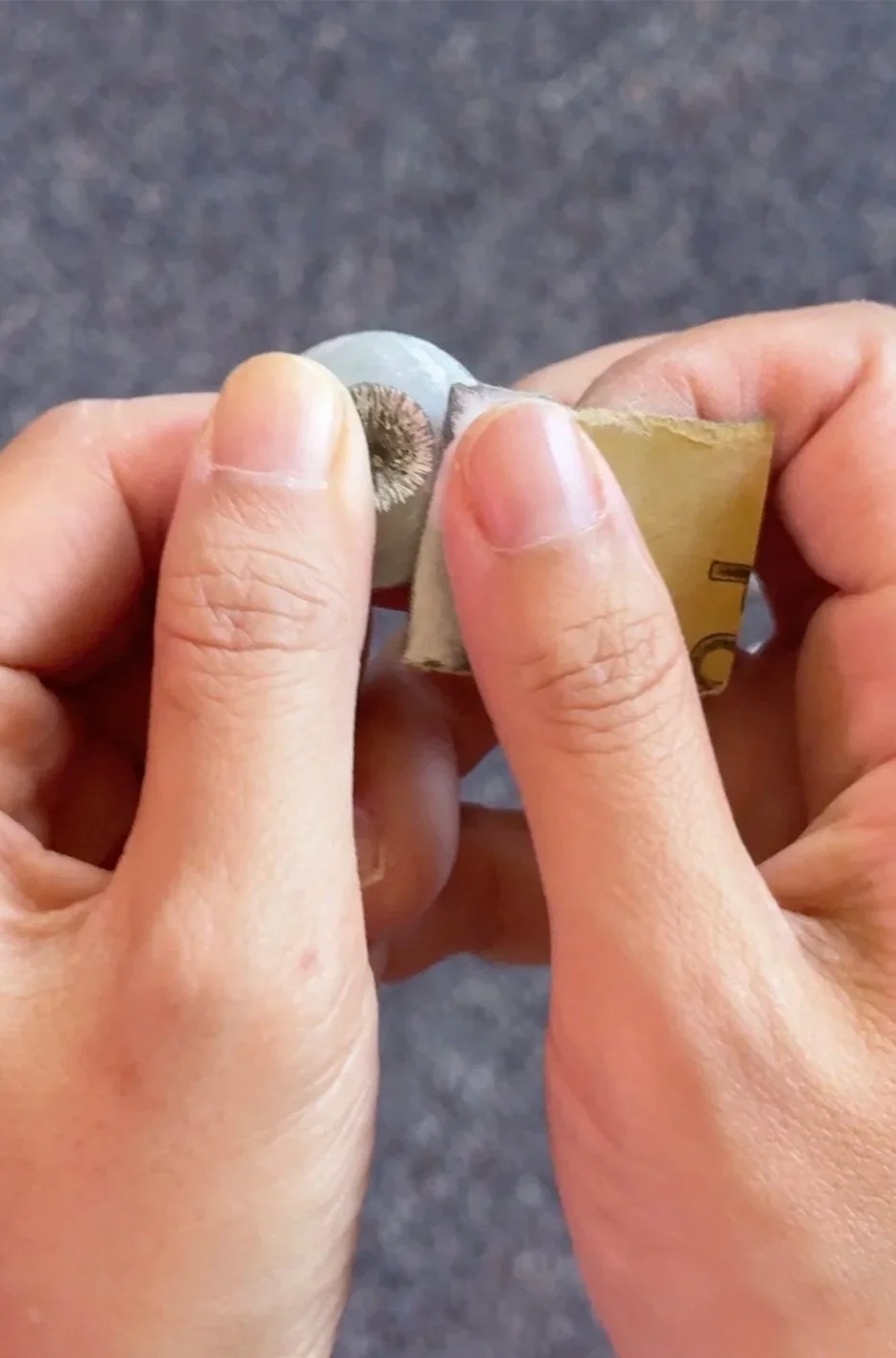
Medium Acrylic paint on wood and epoxy clay
Growing up surrounded by the incense smoke, altars, and ancestral rituals of Daoist and Buddhist practices in southern Taiwan, the spirit world never felt abstract. It was a living, breathing neighborhood wherever I went. Years later, my healing journey took me into the Amazonian jungle in Peru, where curanderas/curanderos practicing Shipibo-Conibo traditions introduced me to the power of sacred plant medicine.
Through meditative preparation, ceremonial dietas and the transmission of icaros, sacred healing songs that translate into luminous, geometric codes, the teachers showed me how sound, intention, animals, insects and plant intelligence reshape our inner architecture.
Icaro Of The Unseen Dharma is born from the direct intersection of these two worlds. It is a personal chronicle of my spiritual growth, mapping the internal landscapes of memory, and healing.
The series is split into two mirrored plaques. Each piece holds its own internal dialogue between light and dark, Yin and Yang. Side-by-side, they form a larger external equilibrium, acting as a bridge between the active transmission of teachings and quiet, receptive surrender.
Weaving Serpent’s Song Left Plaque (Yang)
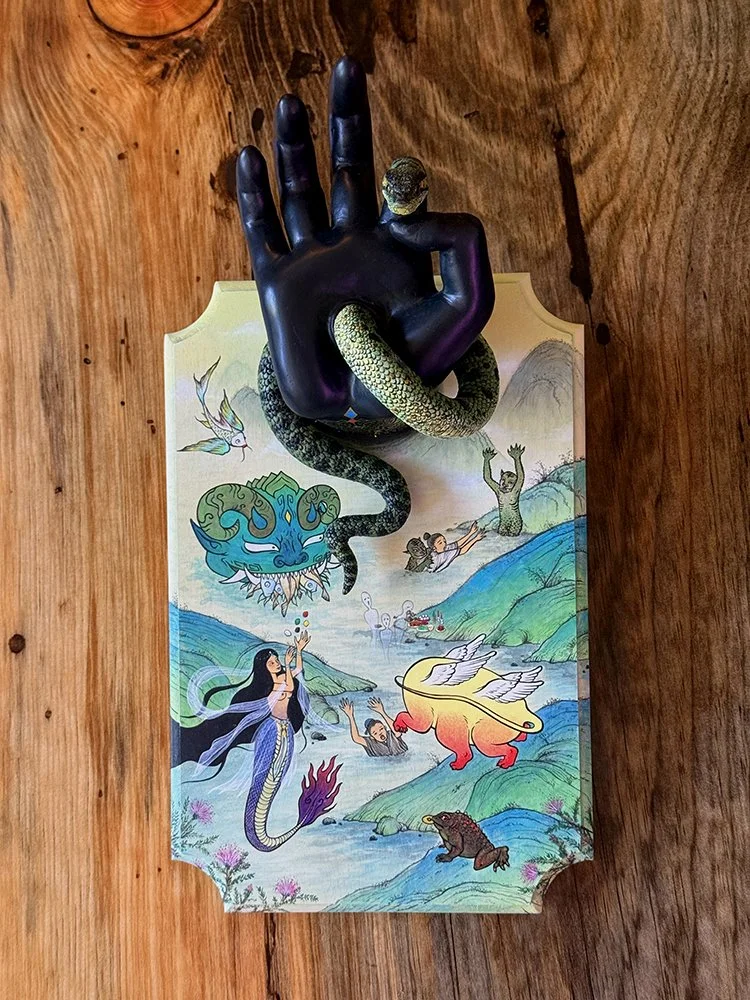
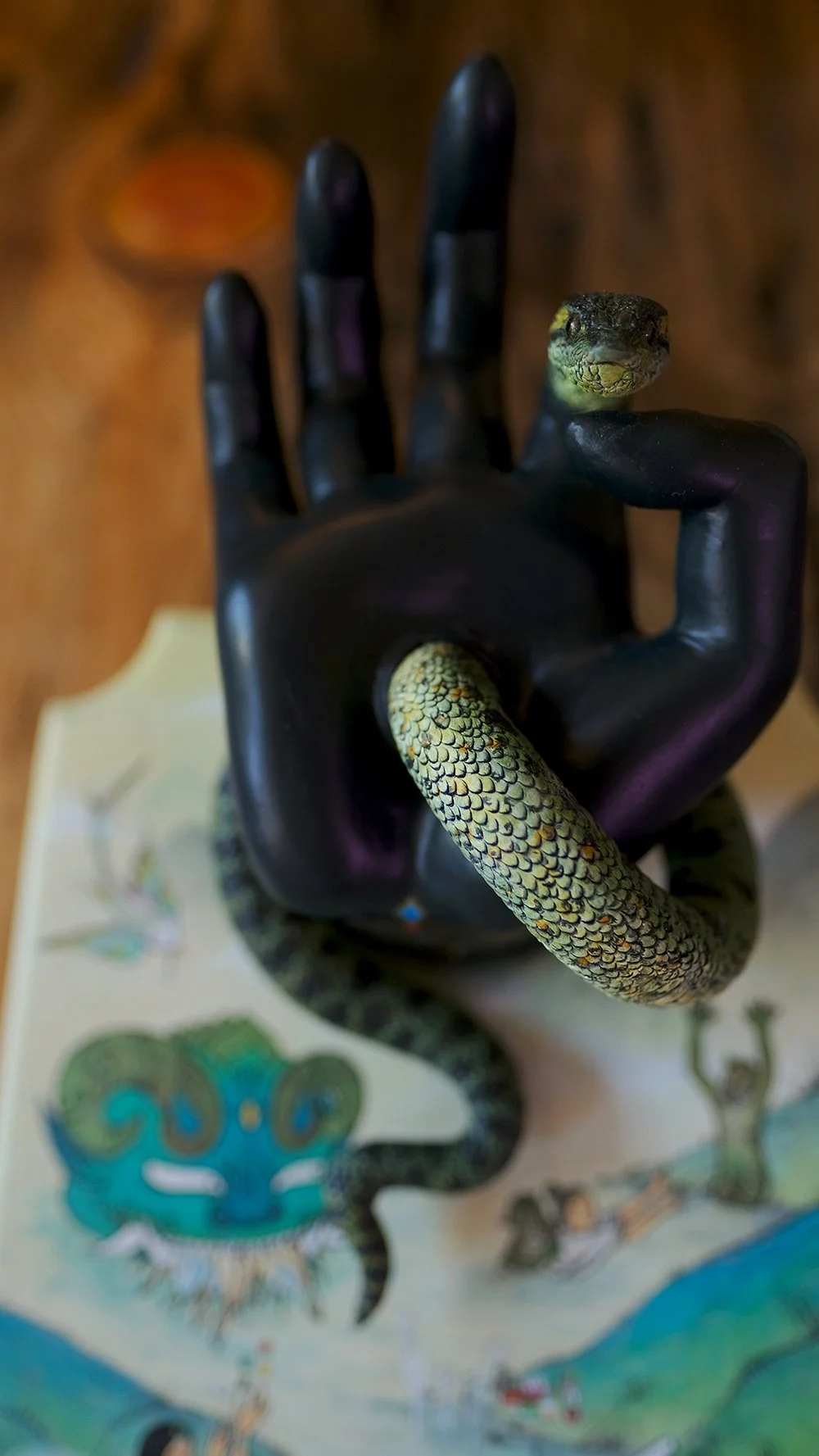
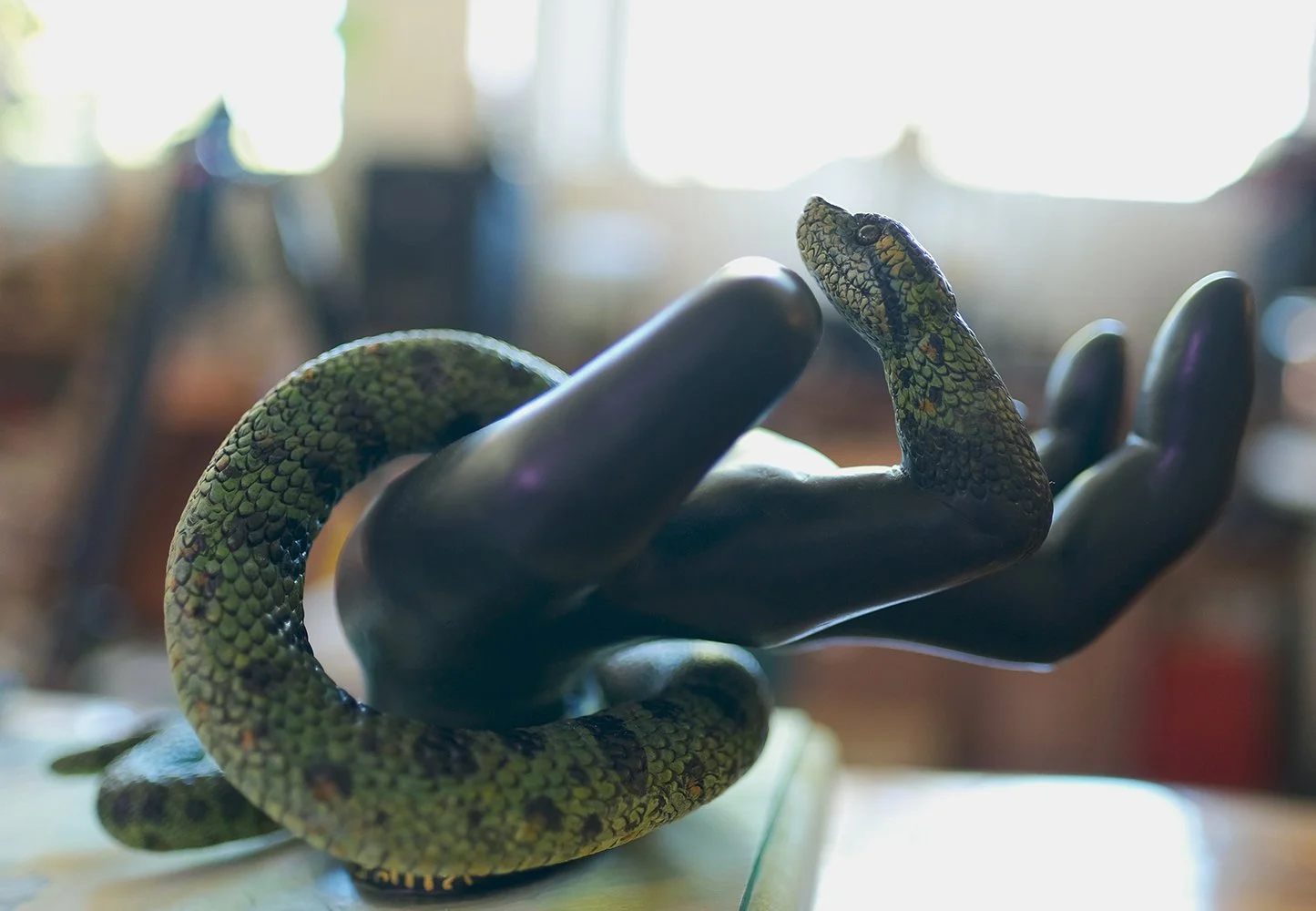
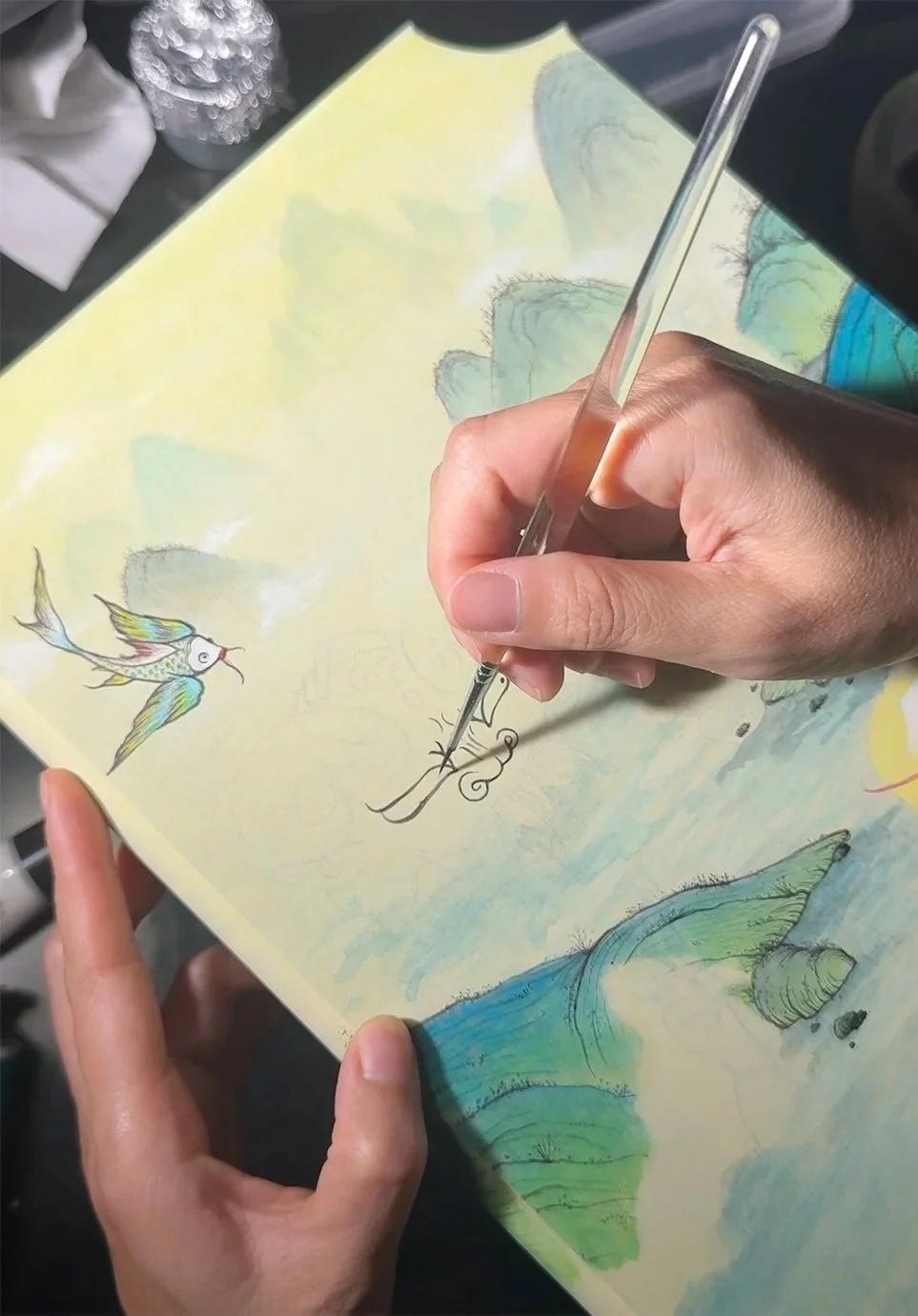
A dark obsidian hand rests against a light-filled Daoist water-world.
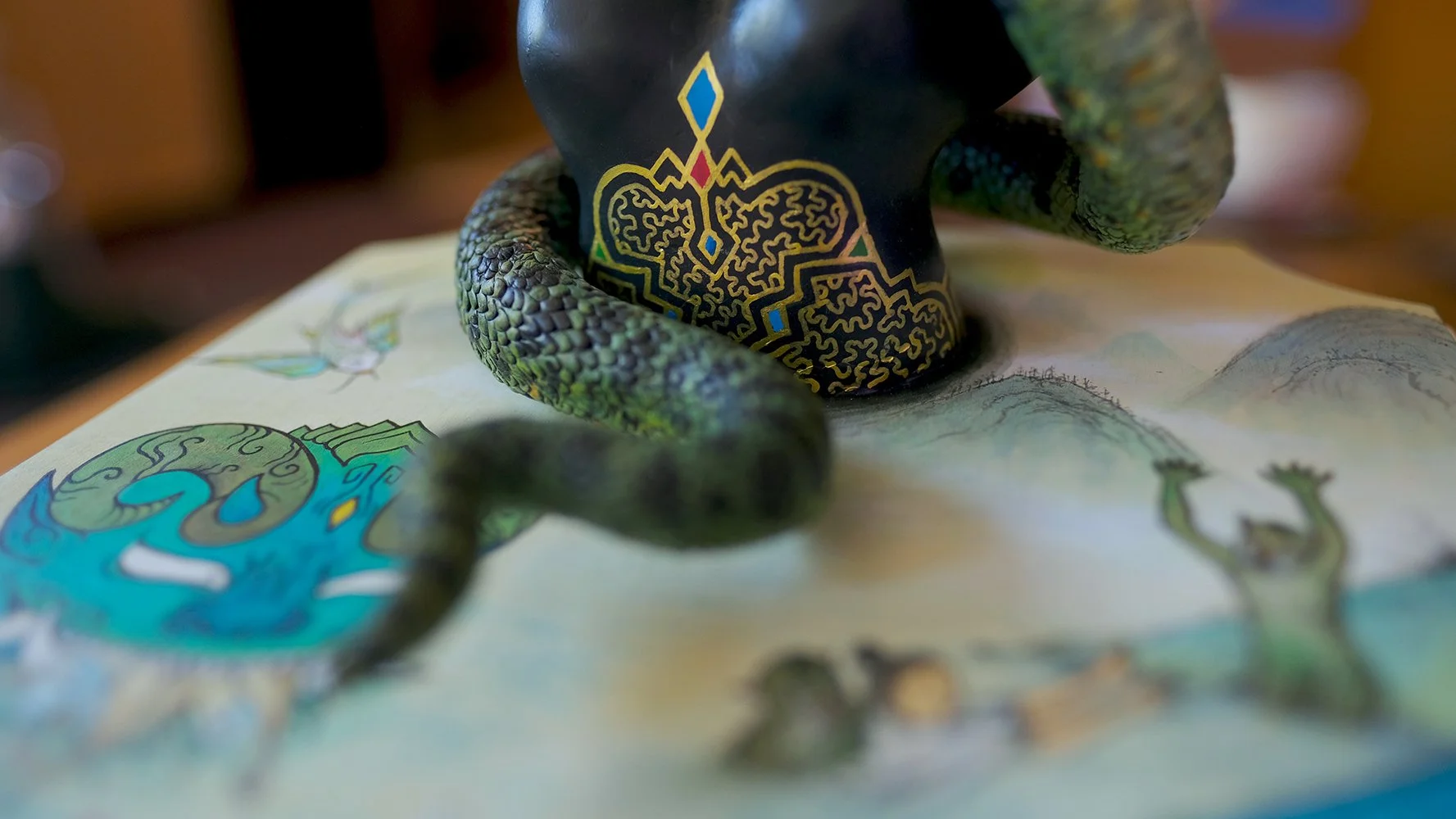
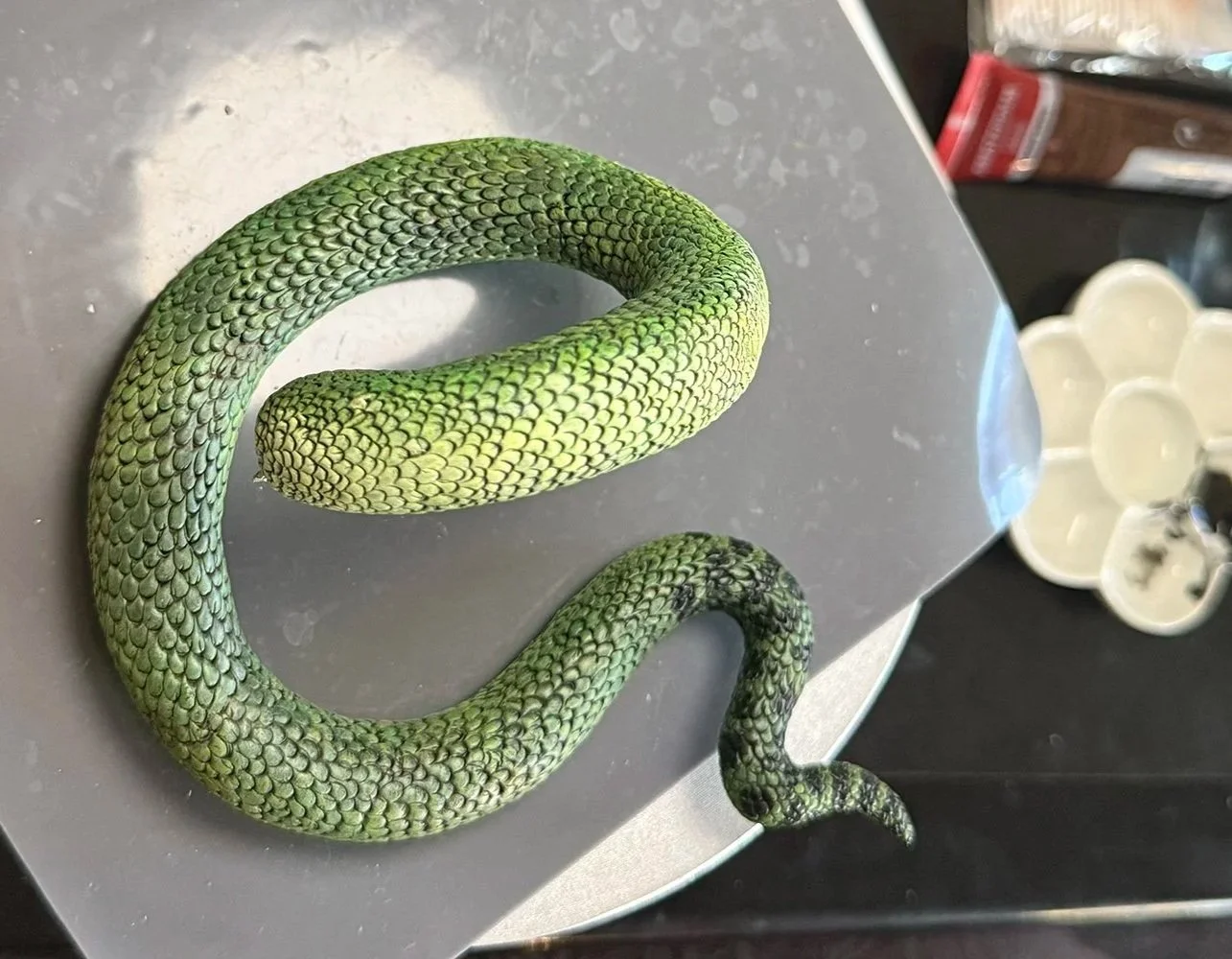
The hand forms the Vitarka Mudra, the sacred gesture of teaching, wisdom, and cosmic law. The index finger transforms into the living head of a green anaconda, known locally as Yacumama (Mother of the Water), its body wrapping closely around the wrist to symbolize the eternal circle of truth and spiritual renewal. Etched across the wrist are sacred Shipibo-Conibo geometric patterns (Kené), moving energy and sound-waves through the body.
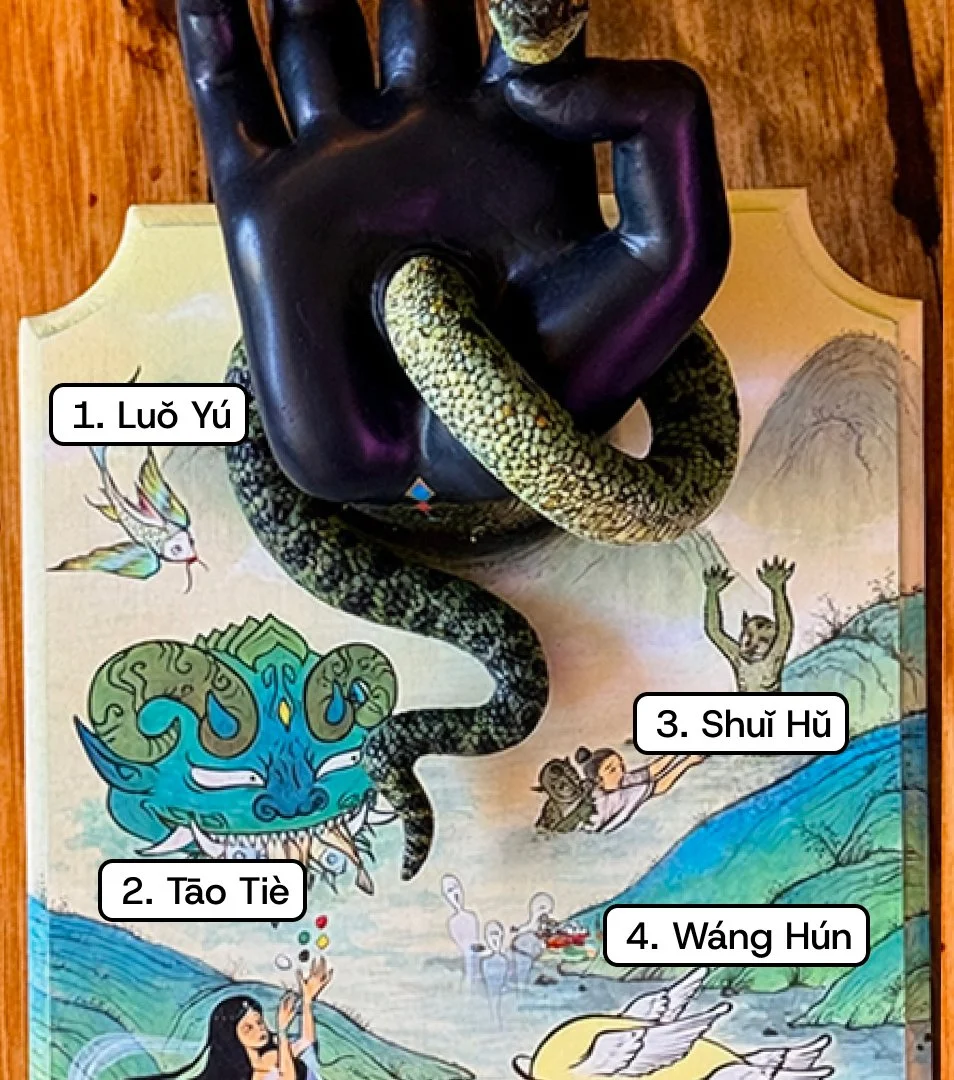
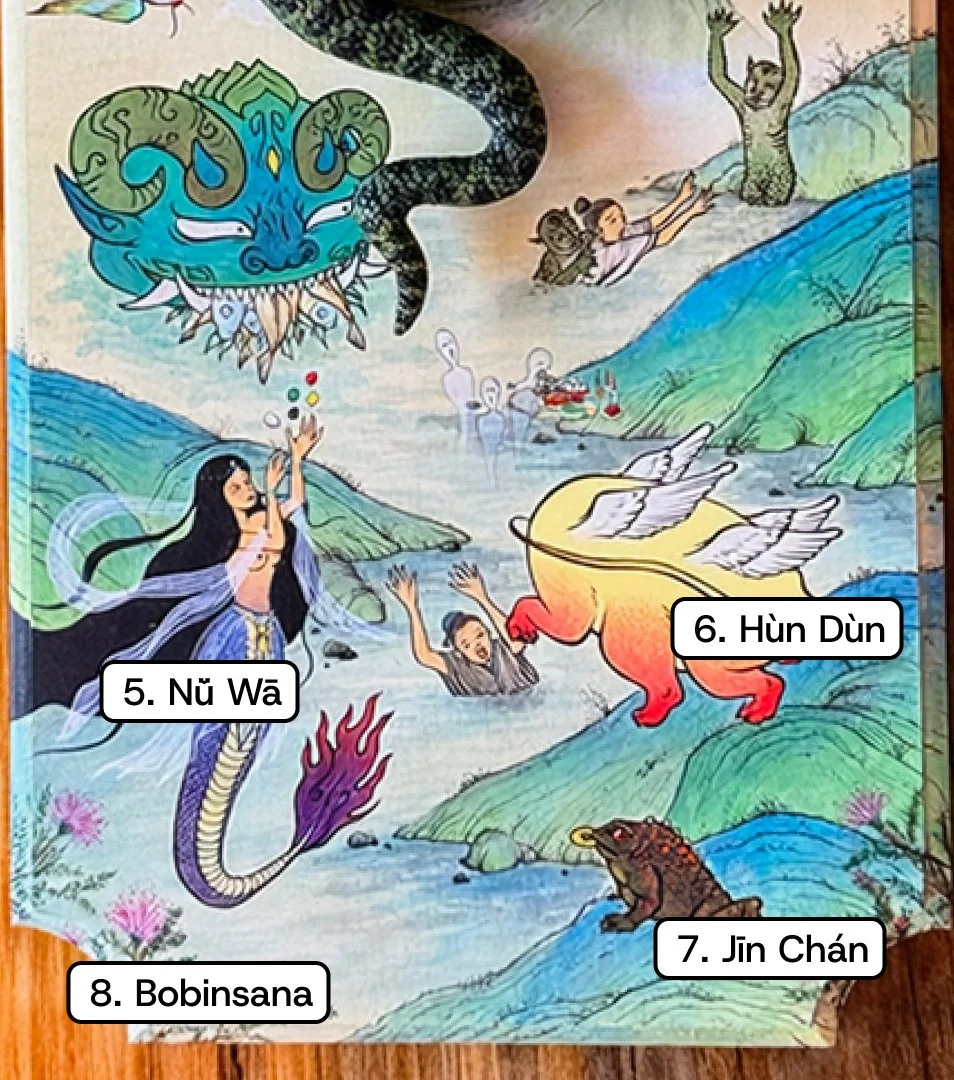
Mythological & Elemental Guide
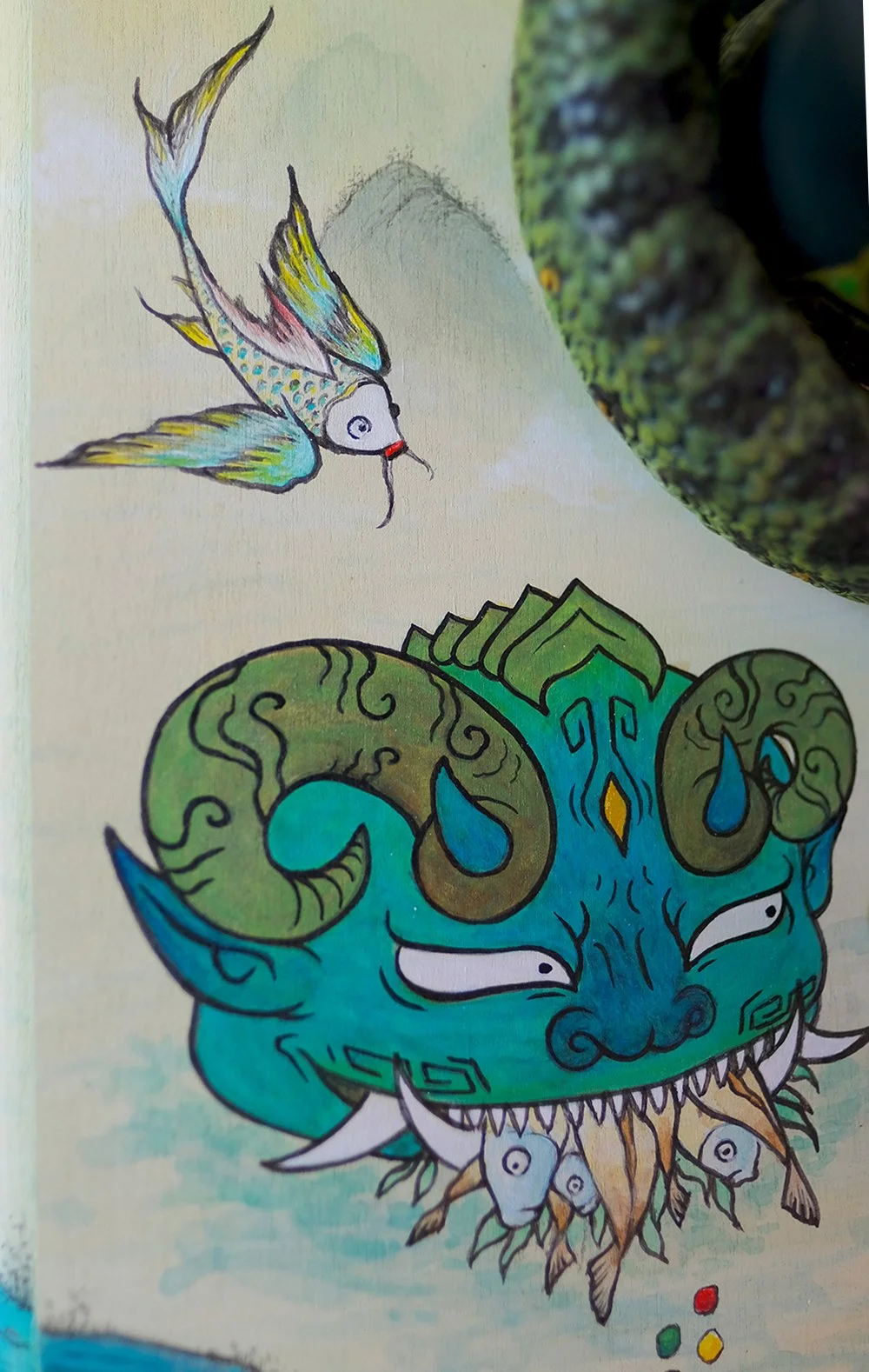
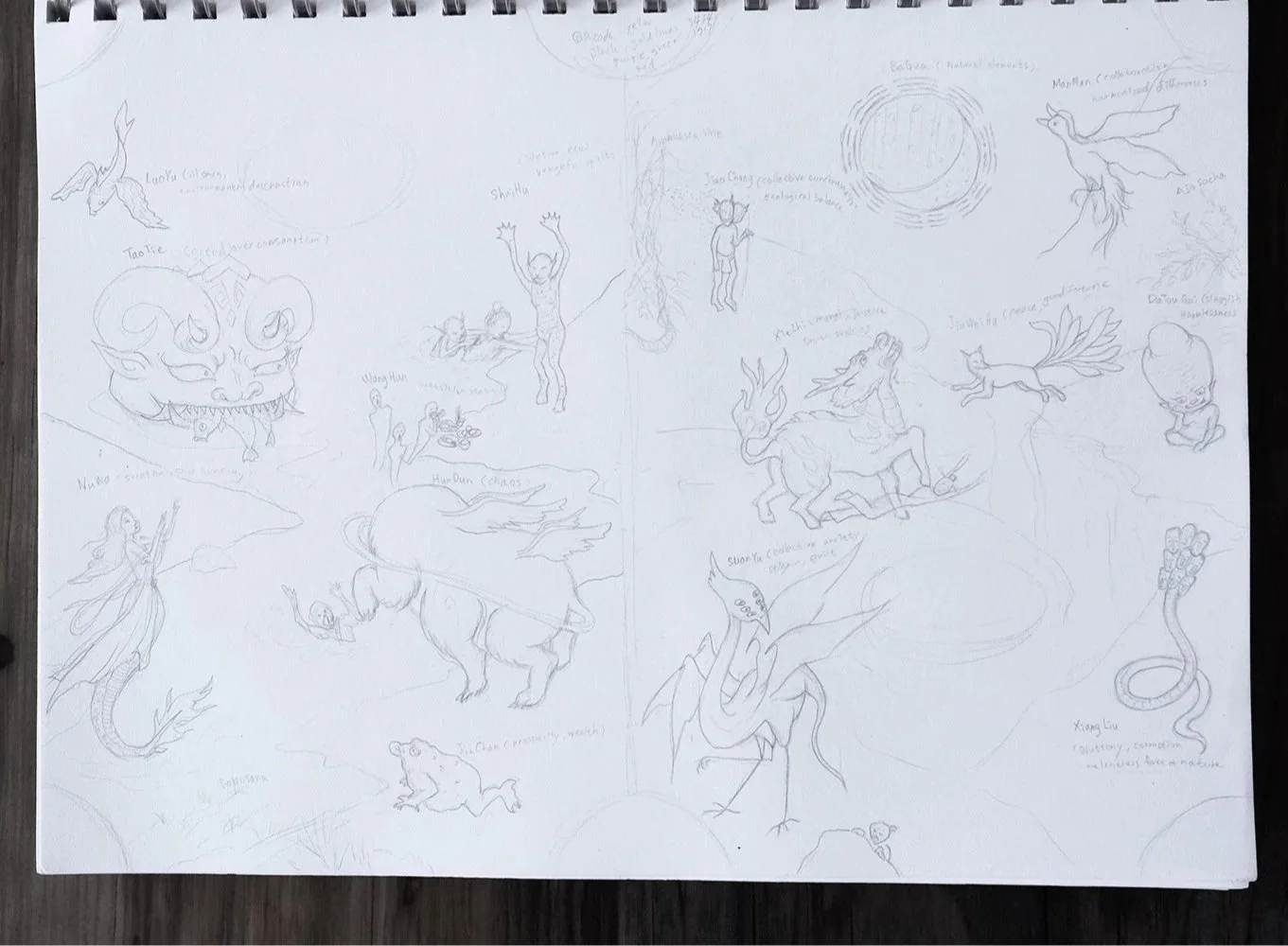
1 Luǒ Yú / 蠃魚 ㄌㄨㄛˇ ㄩˊ (Winged Fish-Bird Spirit): A winged fish-bird spirit watching quietly from the upper atmosphere. Its appearance signals turbulent times, reminding us of the invisible shifts in our environment that we often ignore until it is too late.
2 Tāo Tiè / 饕餮 ㄊㄠ ㄊㄧㄝˋ (Gluttonous Beast Head): A fierce, turquoise-scaled gluttonous beast head floating near the river. Rooted in ancient ritual bronzes and mythological texts, it represents the endless hunger of the ego and the modern trap of overconsumption that drains our spiritual vitality.
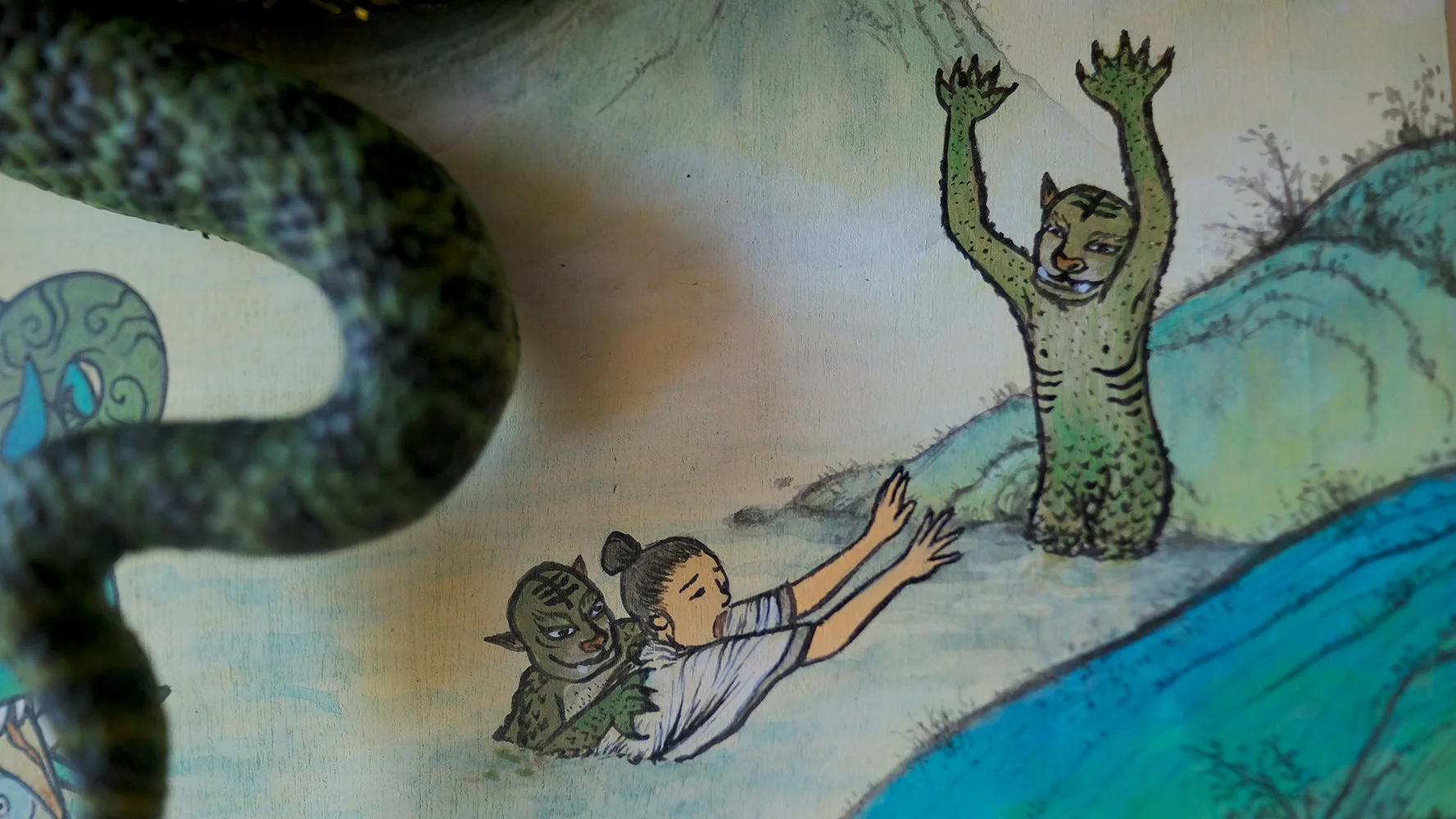
3 Shuǐ Hǔ / 水虎 ㄕㄨㄟˇ ㄏㄨˇ (Water-Tiger Sprite): Mischievous water sprites pulling unsuspecting figures into the rushing river currents. It captures the deceptive undertows of illusion and emotional turbulence that try to sweep us away.
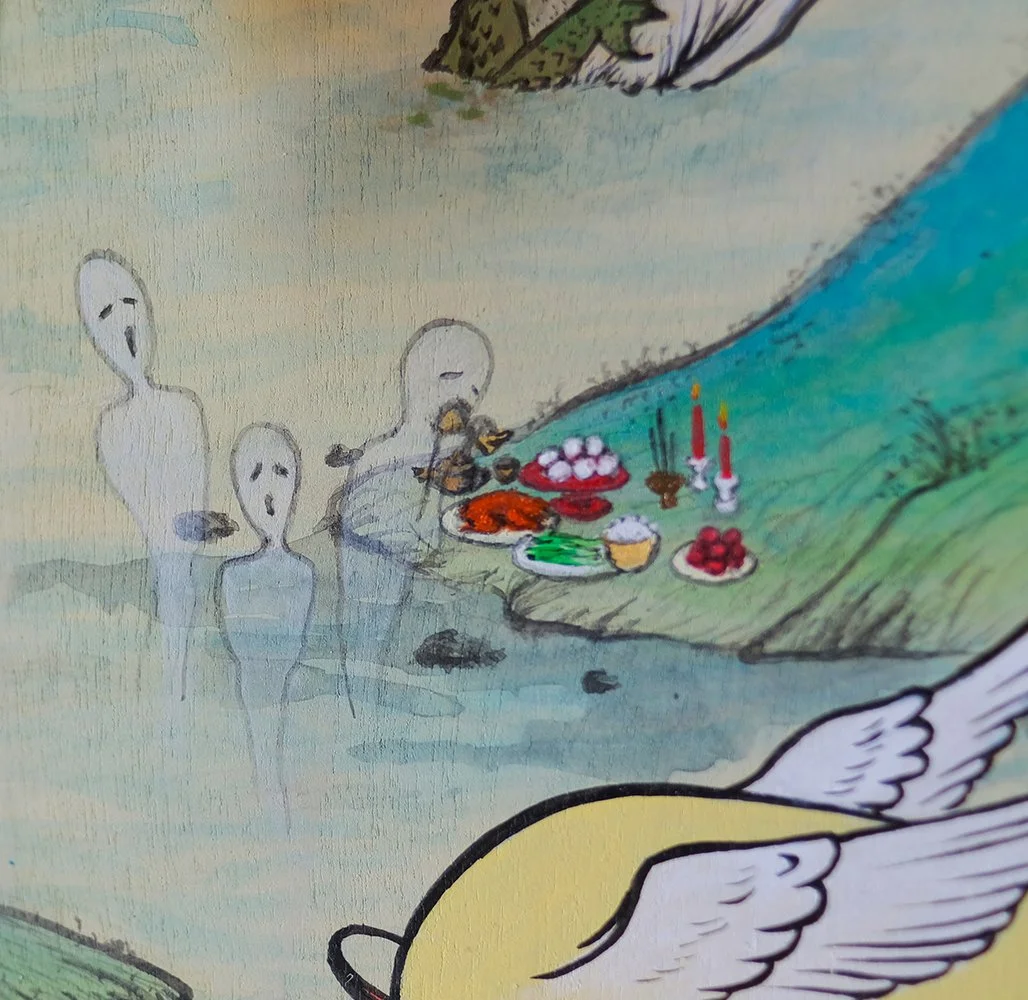
4 Wáng Hún / 亡魂 ㄨㄤˊ ㄏㄨㄣˊ (Liminal Ancestral Spirits): Ethereal, ghost-like figures lingering in the transitional state between worlds, quietly gathering to receive the offerings left by the living. They remind us to honor our roots and the quiet, heavy liminal spaces we all must pass through.
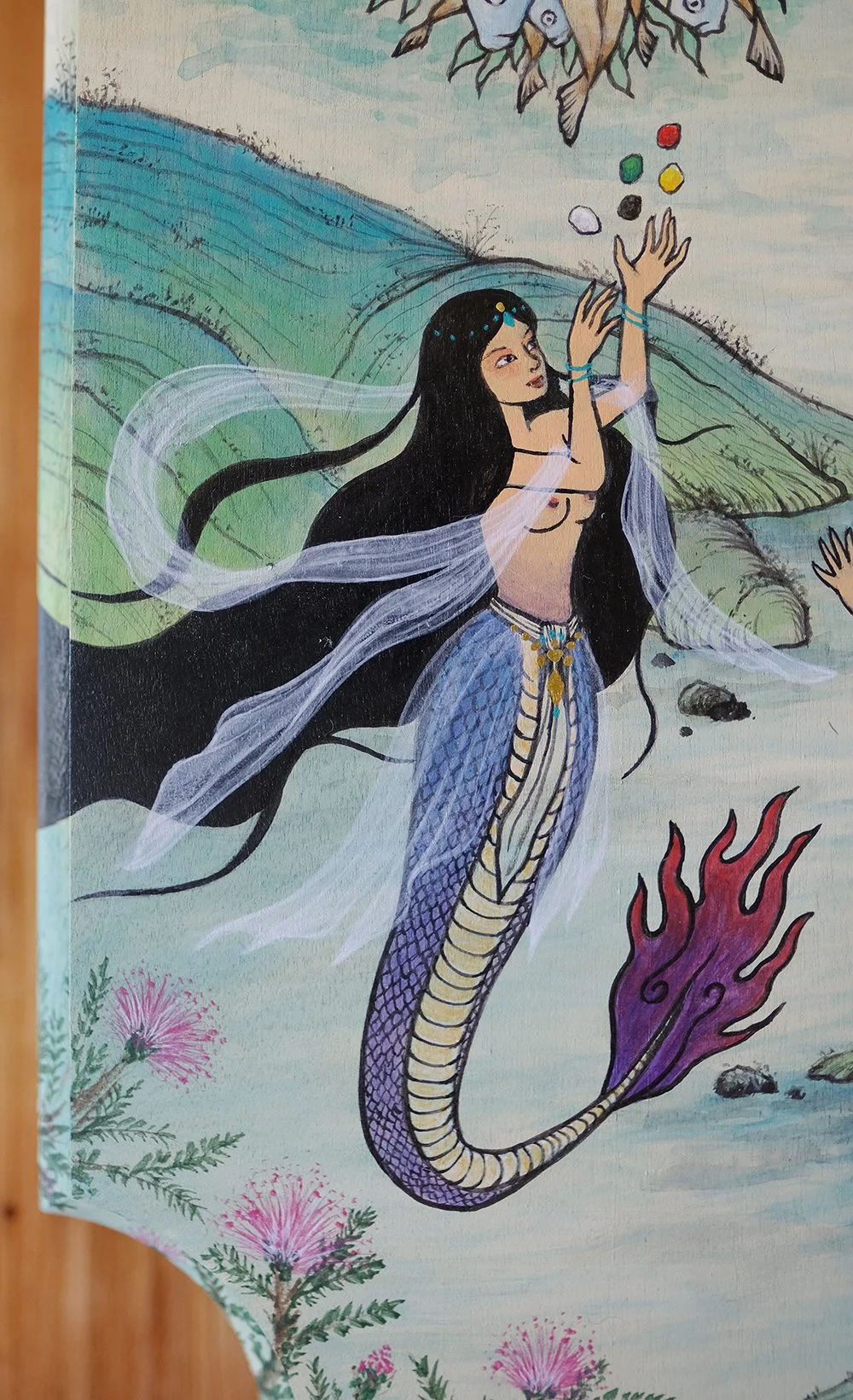
5 Nǚ Wā / 女媧 ㄋㄩˇ ㄨㄚ (Primordial Goddess / Creator Deity): The primordial serpentine mother figure holding up colorful sacred stones. She is the ultimate symbol of creation, endurance, and the fierce love required to stitch a broken world back together.
6 Hùn Dùn / 混沌 ㄏㄨㄣˋ ㄉㄨㄣˋ (Primeval Formless Entity): A strange, four-winged, six-legged faceless creature embodying primordial formlessness. It reminds us that before any clarity or creation can happen, we must learn to find our footing within the discomfort of chaos and paradox.
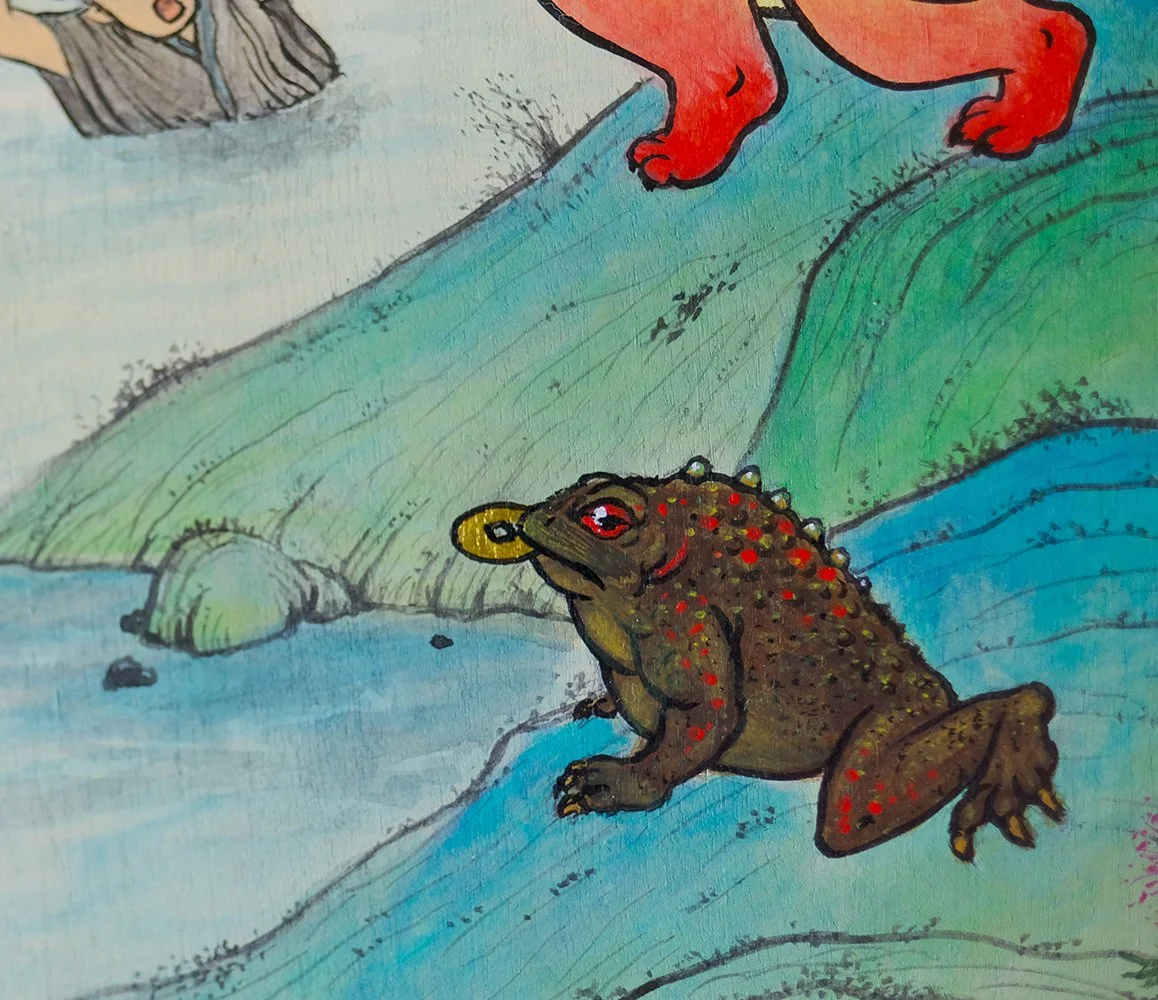
7 Jīn Chán / 金蟾 ㄐㄧㄣ ㄔㄢˊ (Auspicious Wealth Toad): The three-legged money toad sitting faithfully at the riverbank, guarding coin and fortune. A familiar sight in homes and storefronts since childhood, it reminds us to ground our spiritual practice in practical, everyday abundance.
8 Bobinsana (Amazonian Teacher Plant): Delicate pink blossoms blooming softly along the water's edge. In Shipibo-Conibo tradition, Bobinsana is a profound master plant of the water and heart, teaching emotional resilience, adaptability, and deep gentleness amidst life's rushing currents. Its soft flowers carry a subtle yet fierce power that heals and opens the emotional body.
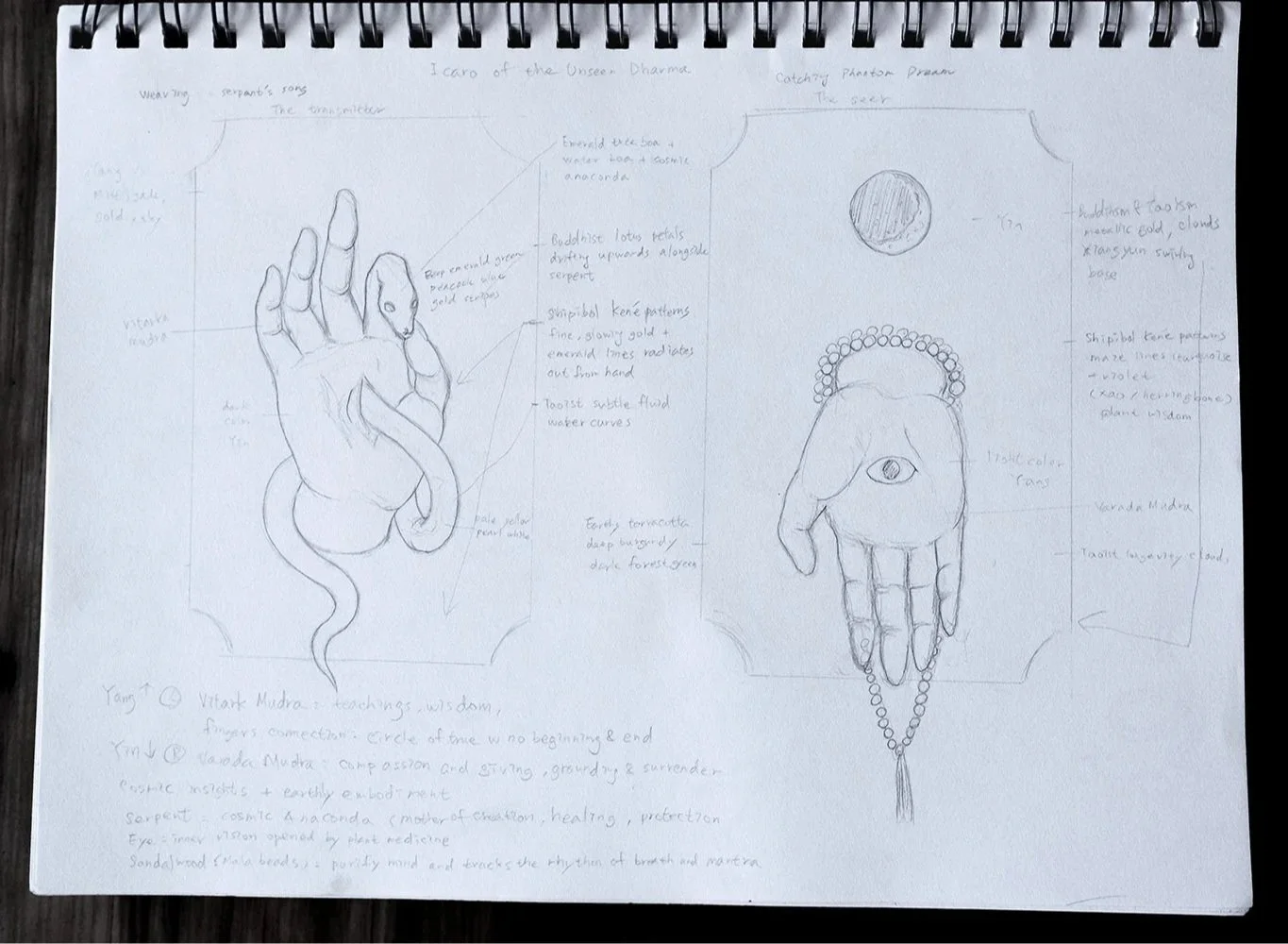
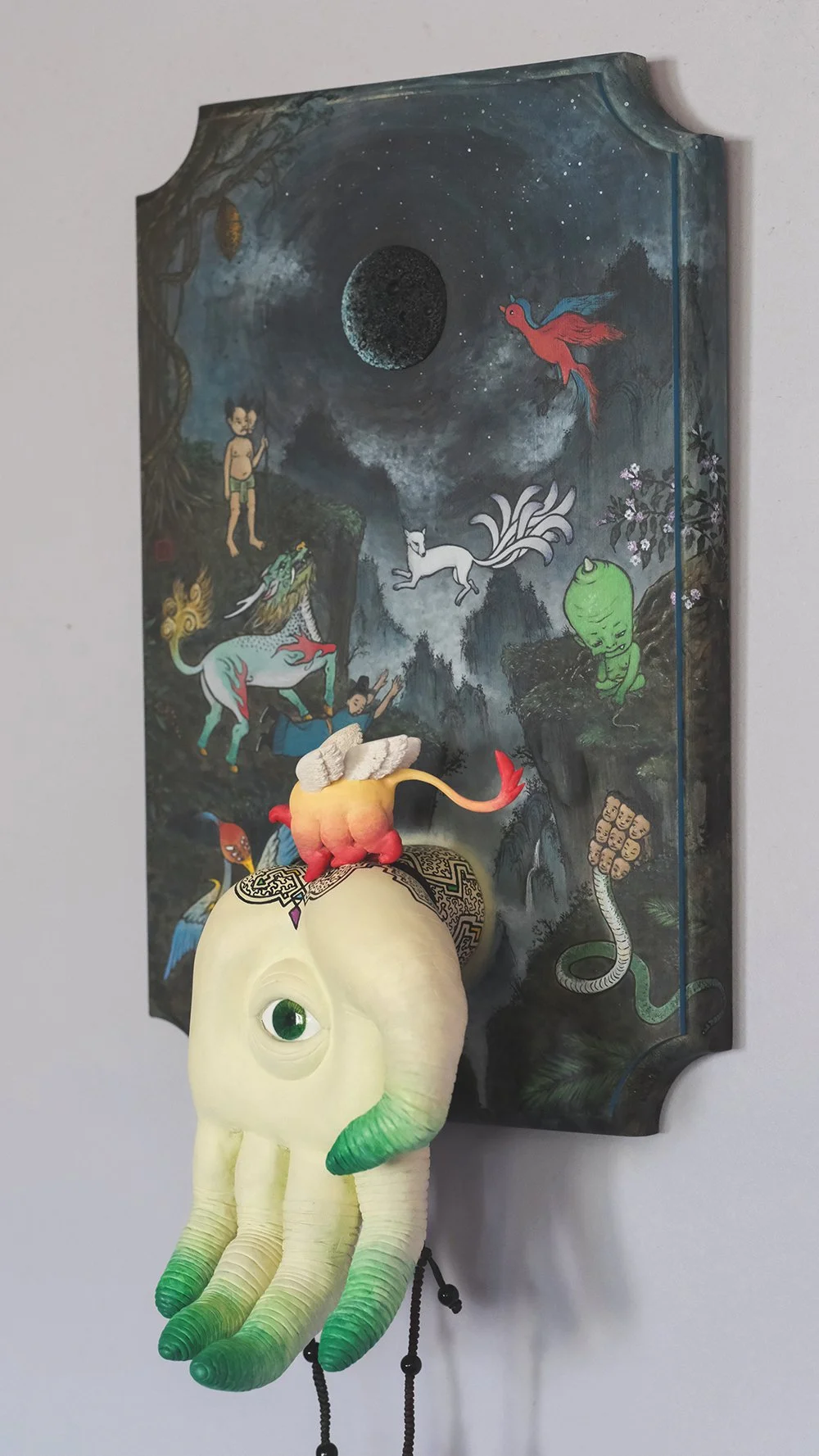
Catching the Phantom Dream Right Plaque (Yin)
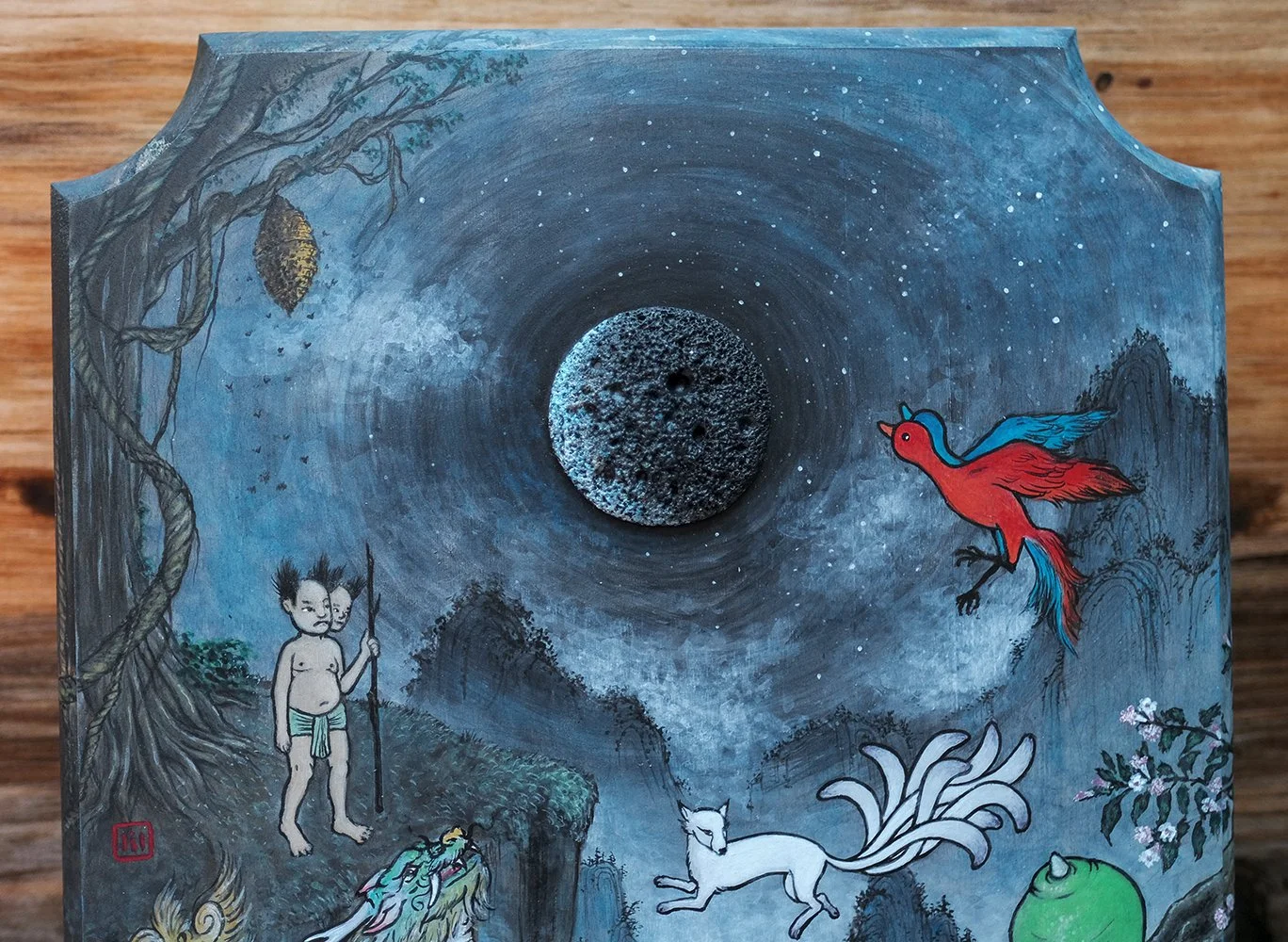
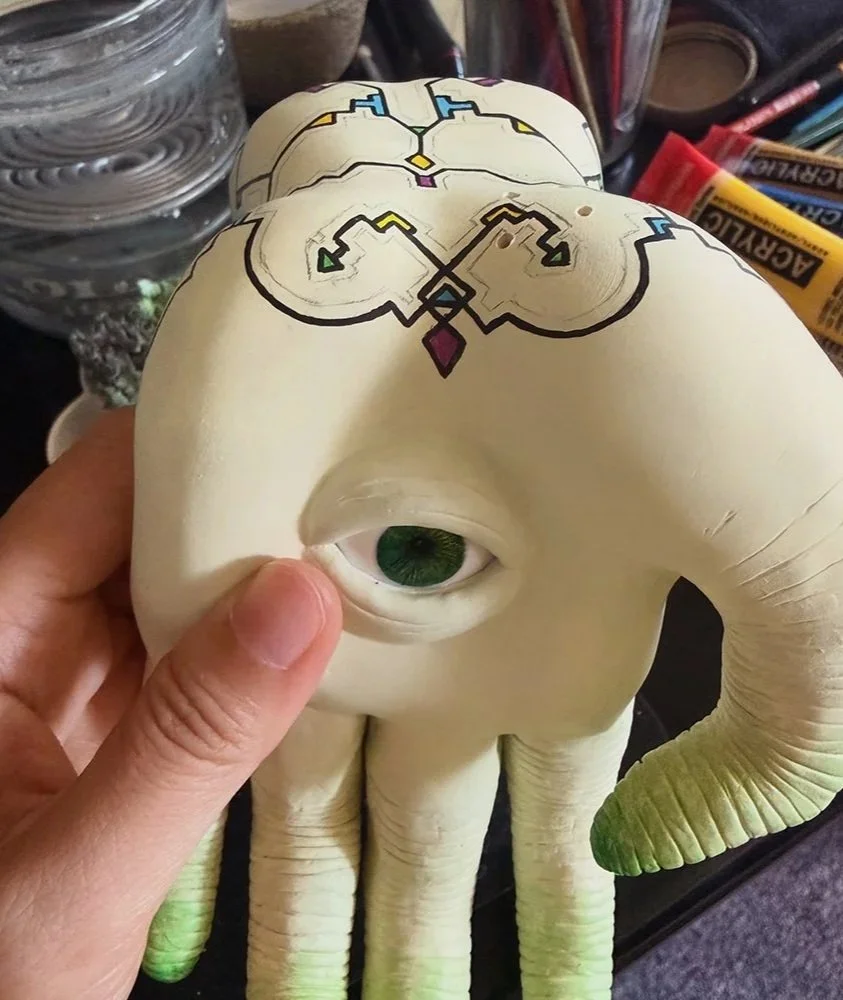
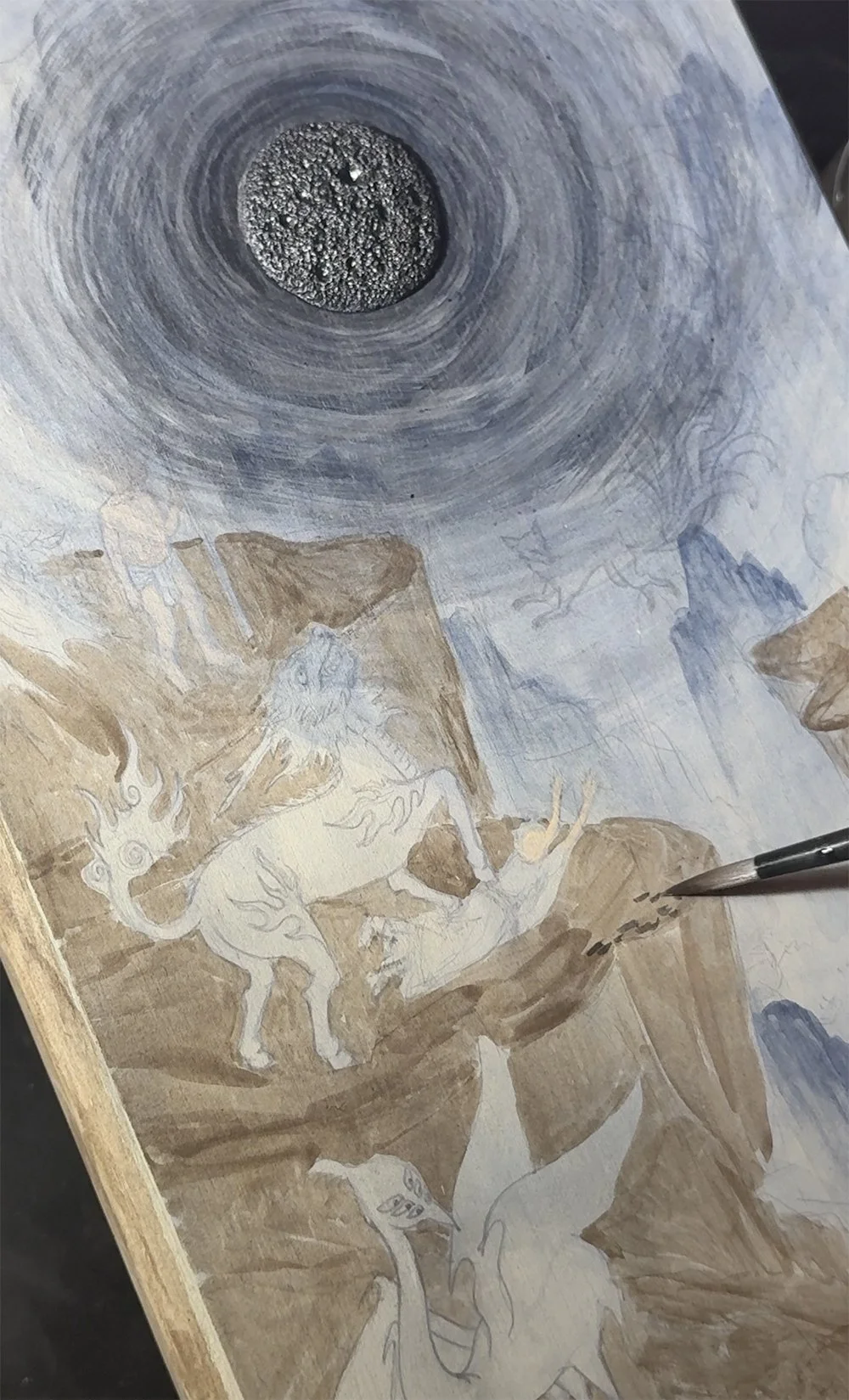
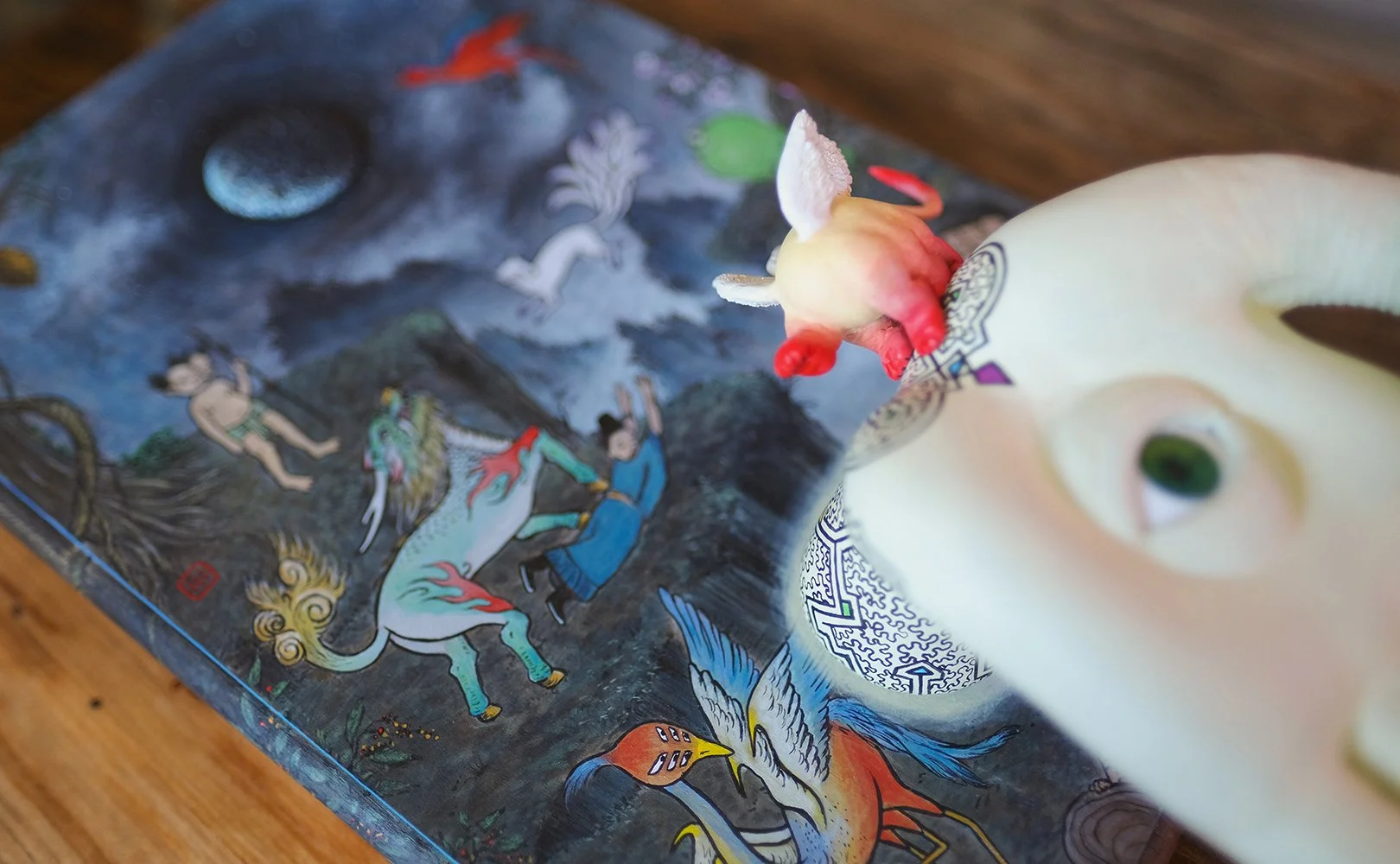
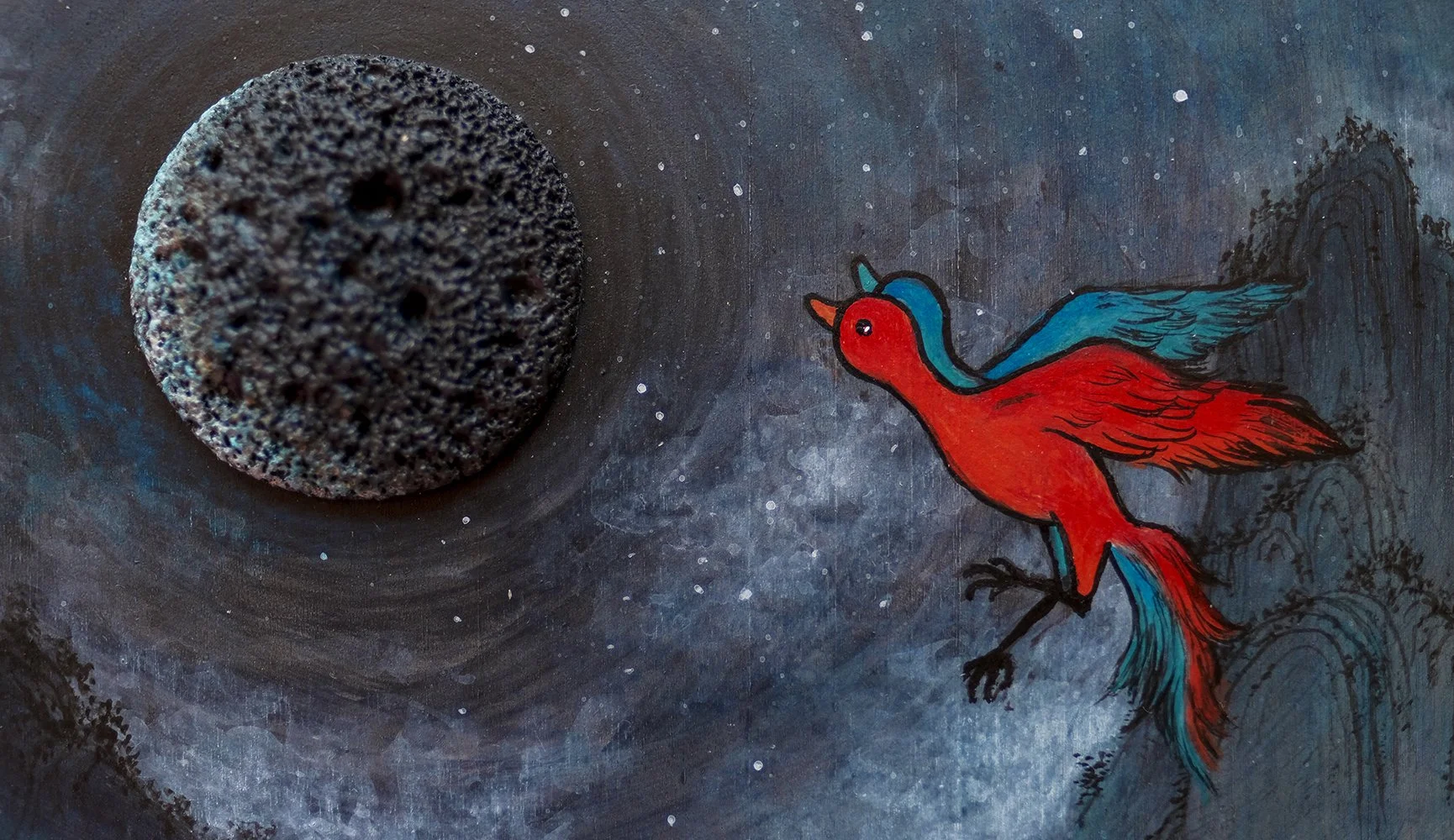
A pale, luminous hand rises against a dark, nocturnal midnight void, a starry mountain sky, and textured mossy cliffs, crowned by a sculpted crescent moon and mountain peak.
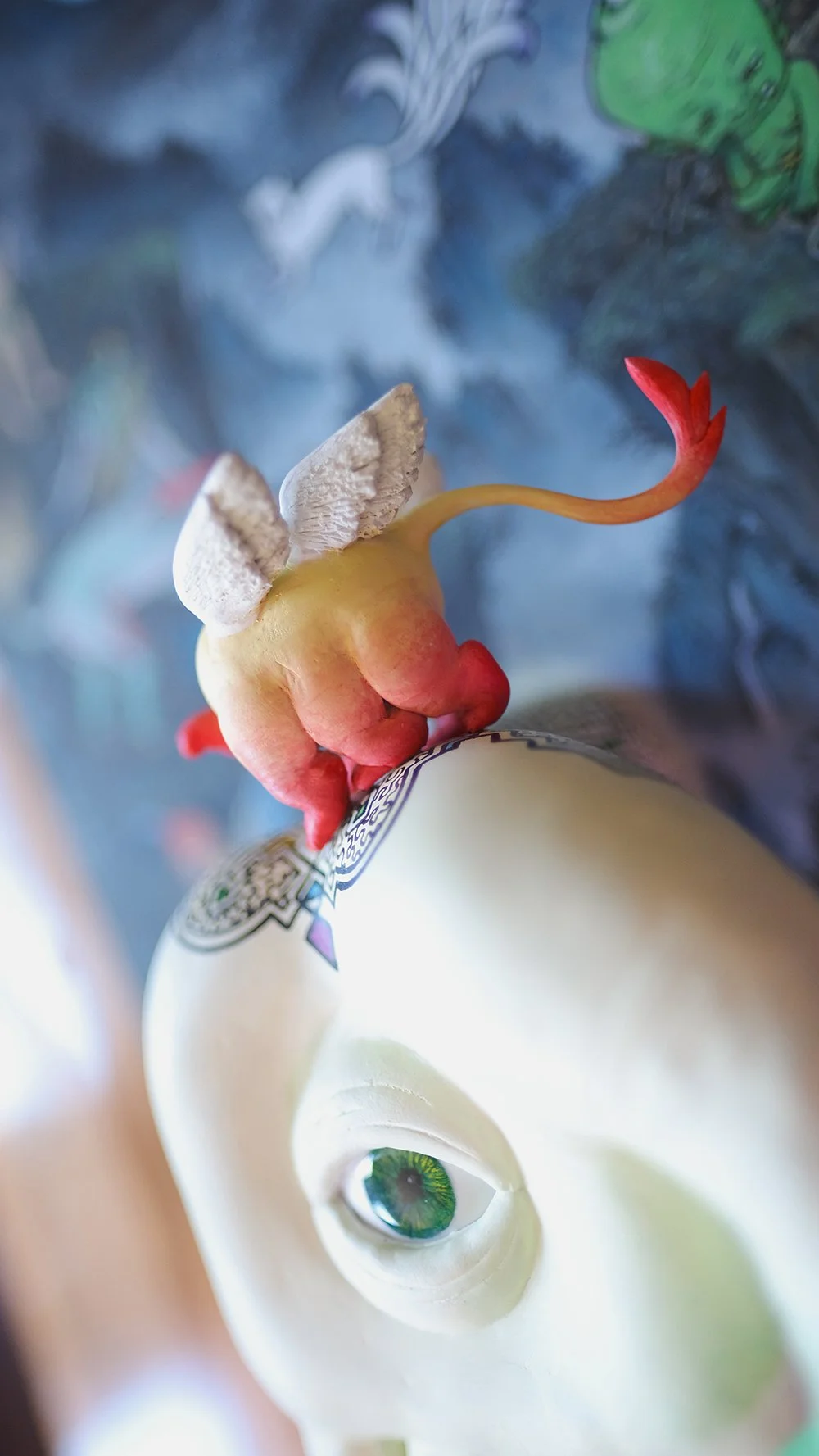
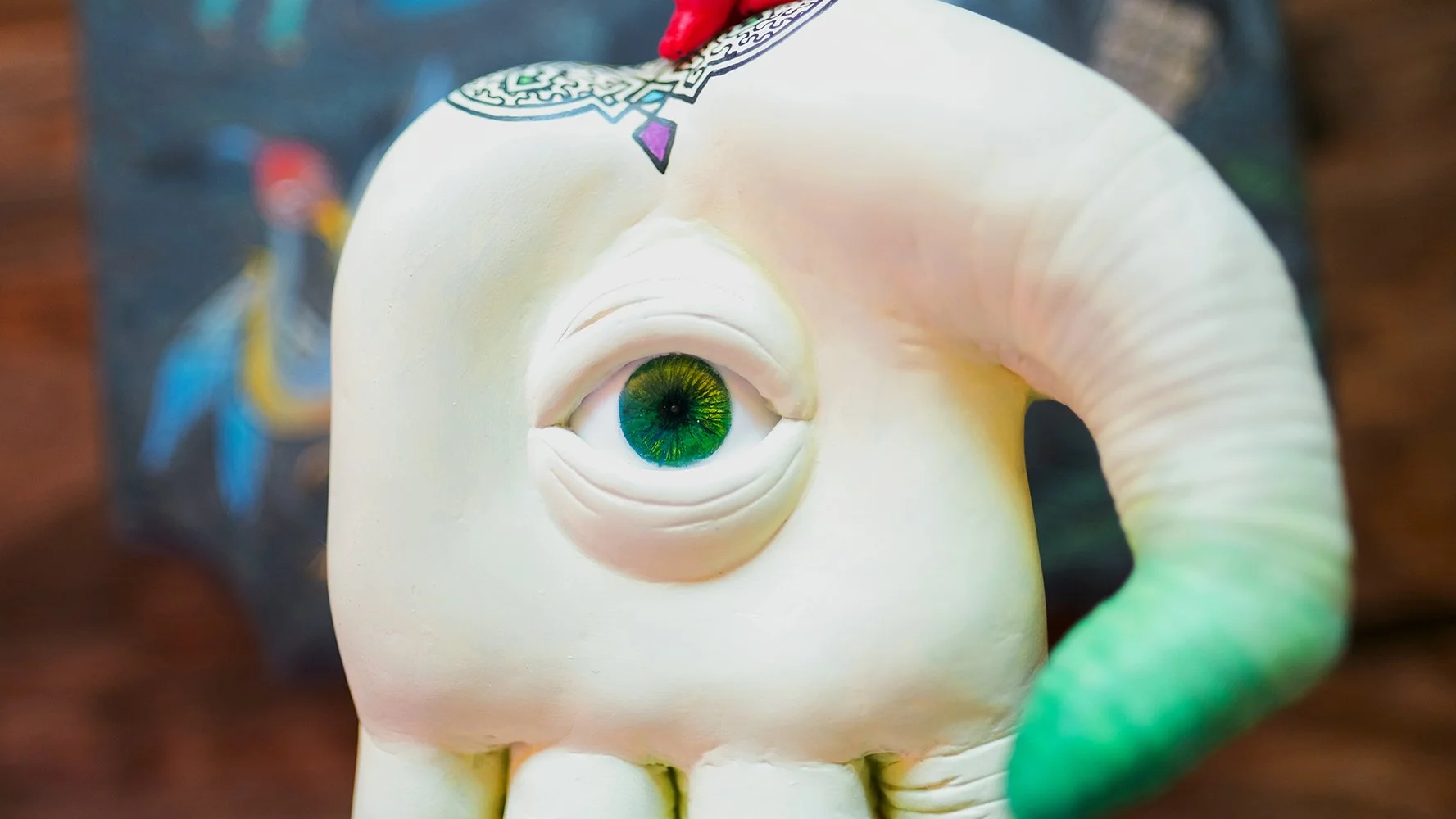
An open palm forms the Varada Mudra, embodying compassion, unconditional giving, and the deep surrender required to ground cosmic insights into daily life. A single eye rests in the center of the palm, representing the inner vision pried open by plant medicine. The hand is anchored by prayer beads, which track the steady rhythm of breath and mantra. The crowning crescent moon brings a sense of quiet transition, lunar intuition, and the deep, nocturnal depths of the subconscious..
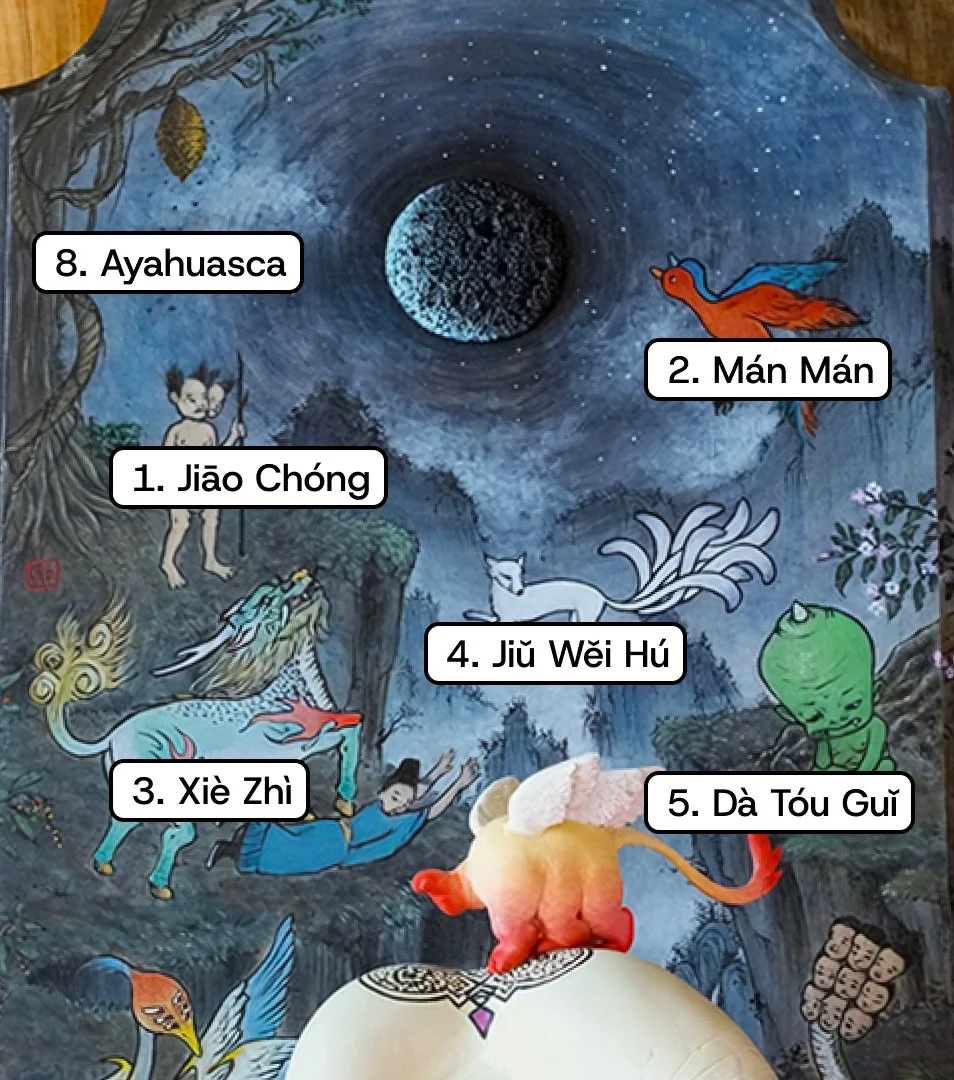
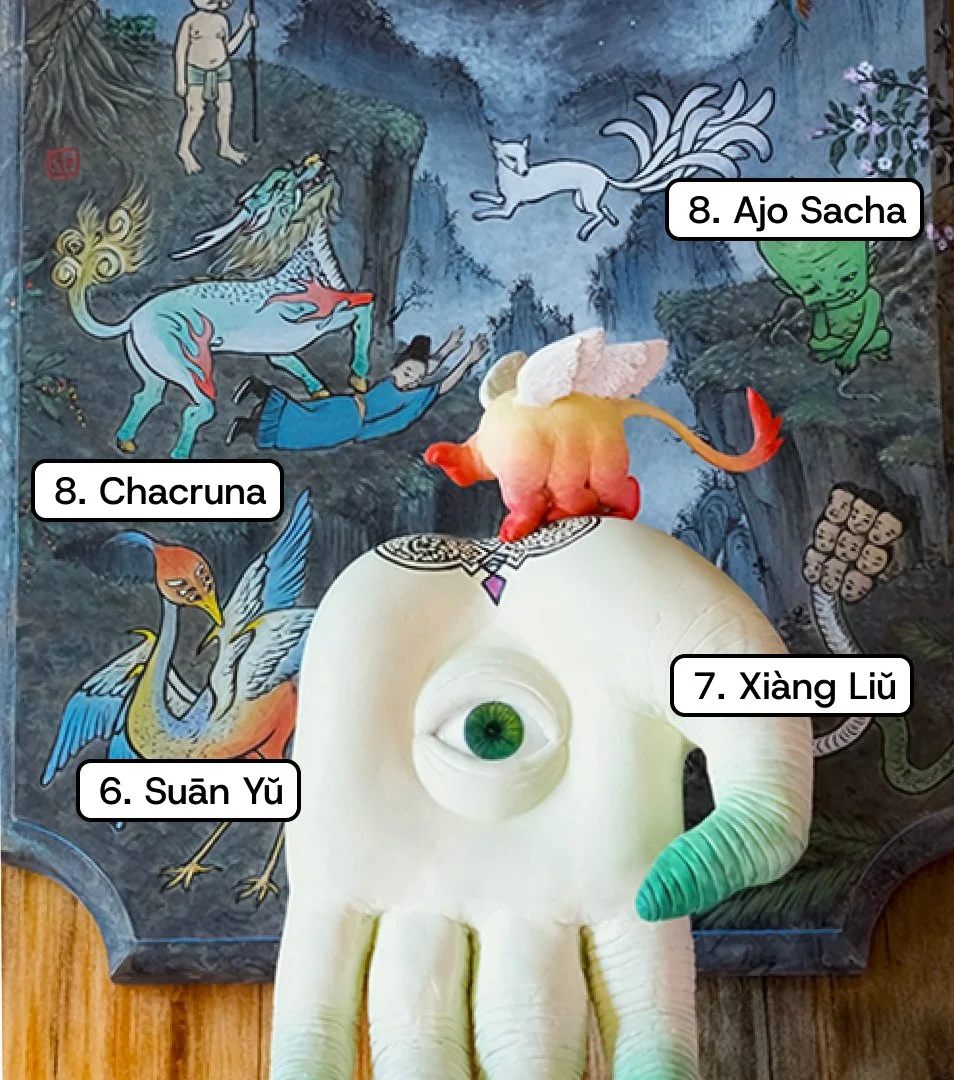
Mythological & Elemental Guide
1 Jiāo Chóng / 驕蟲 ㄐㄧㄠ ㄔㄨㄥˊ (Two-Headed Hive Sovereign): A two-headed mountain deity from ancient lore, traditionally known as the master of stinging insects and the guardian of the hive. Here, it symbolizes collective consciousness and ecological balance, weaving quietly through the terrain.
2 Mán Mán / 蠻蠻 ㄇㄢˊ ㄇㄢˊ (Conjoined Twin-Headed Bird): A twin-headed bird sharing a single, harmonious flight. They represent the beauty of true collaboration and how two disparate halves must blend their wings to move forward.
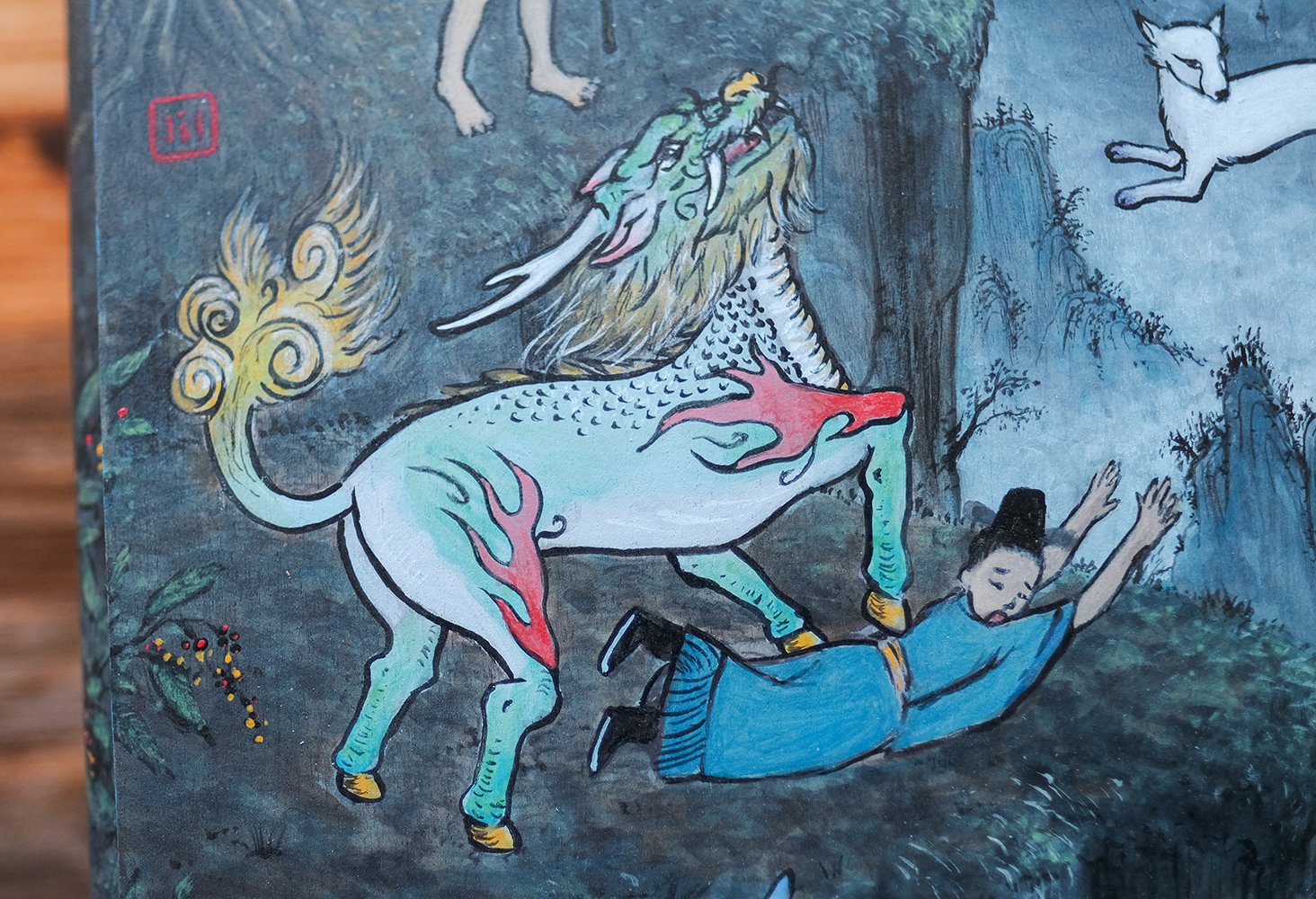
3 Xiè Zhì / 獬豸 ㄒㄧㄝˋ ㄓˋ (Single-Horned Arbiter of Justice): The legendary single-horned beast of absolute morality and truth-seeking. Far from being entirely peaceful, it gazes up intently at the moon and sky while pressing a heavy leg down upon a corrupted official, reminding us that true justice requires active reckoning.
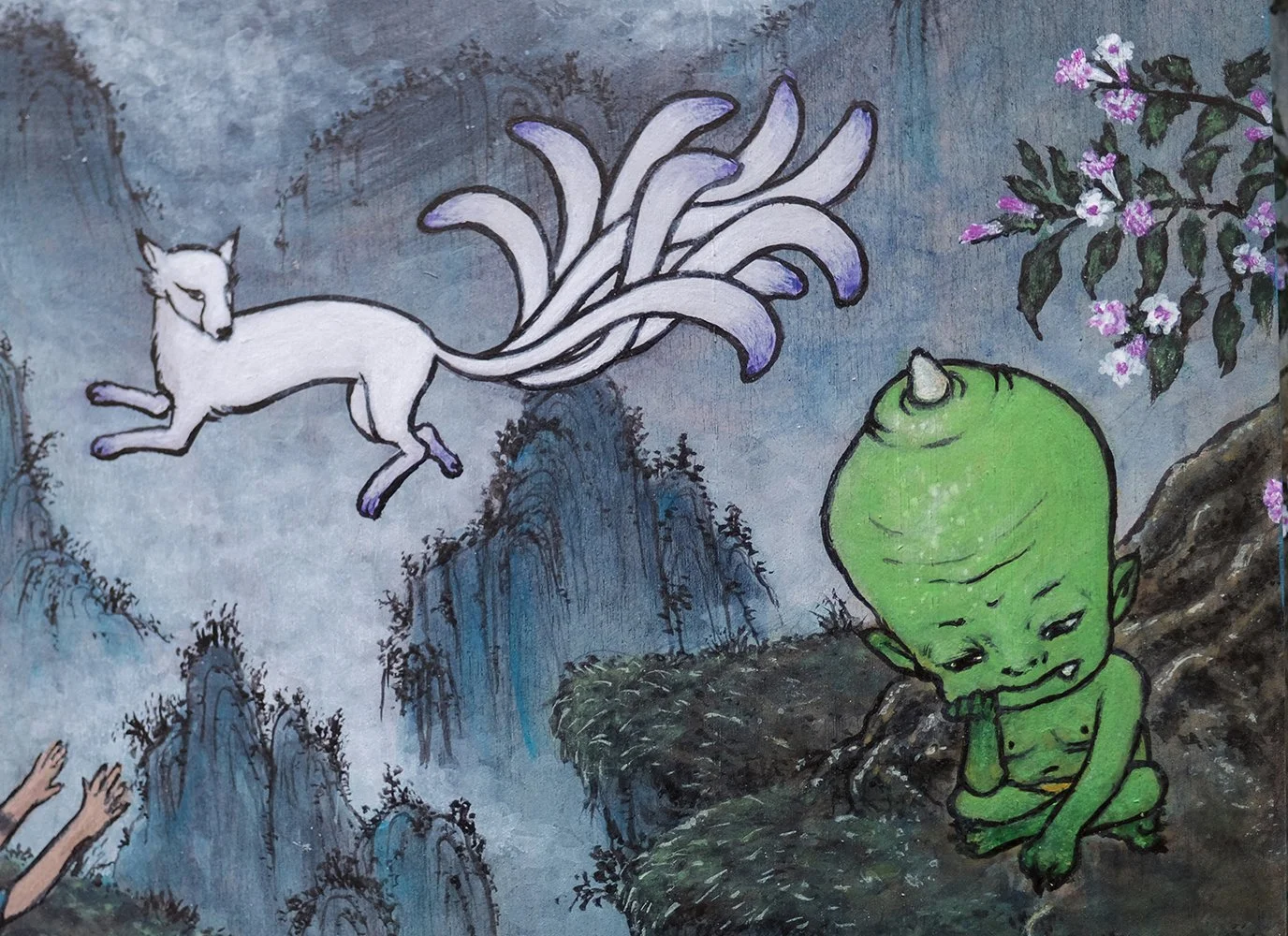
4 Jiǔ Wěi Hú / 九尾狐 ㄐㄧㄡˇ ㄨㄟˇ ㄏㄨˊ (Nine-Tailed Shapeshifting Spirit): The nine-tailed white fox gliding gracefully across the misty landscape. Beyond the folklore, it reminds us how we must learn to transform and adapt to life's shifting terrain, using emotional resilience and quiet flexibility rather than brute force to navigate our tests and transitions.
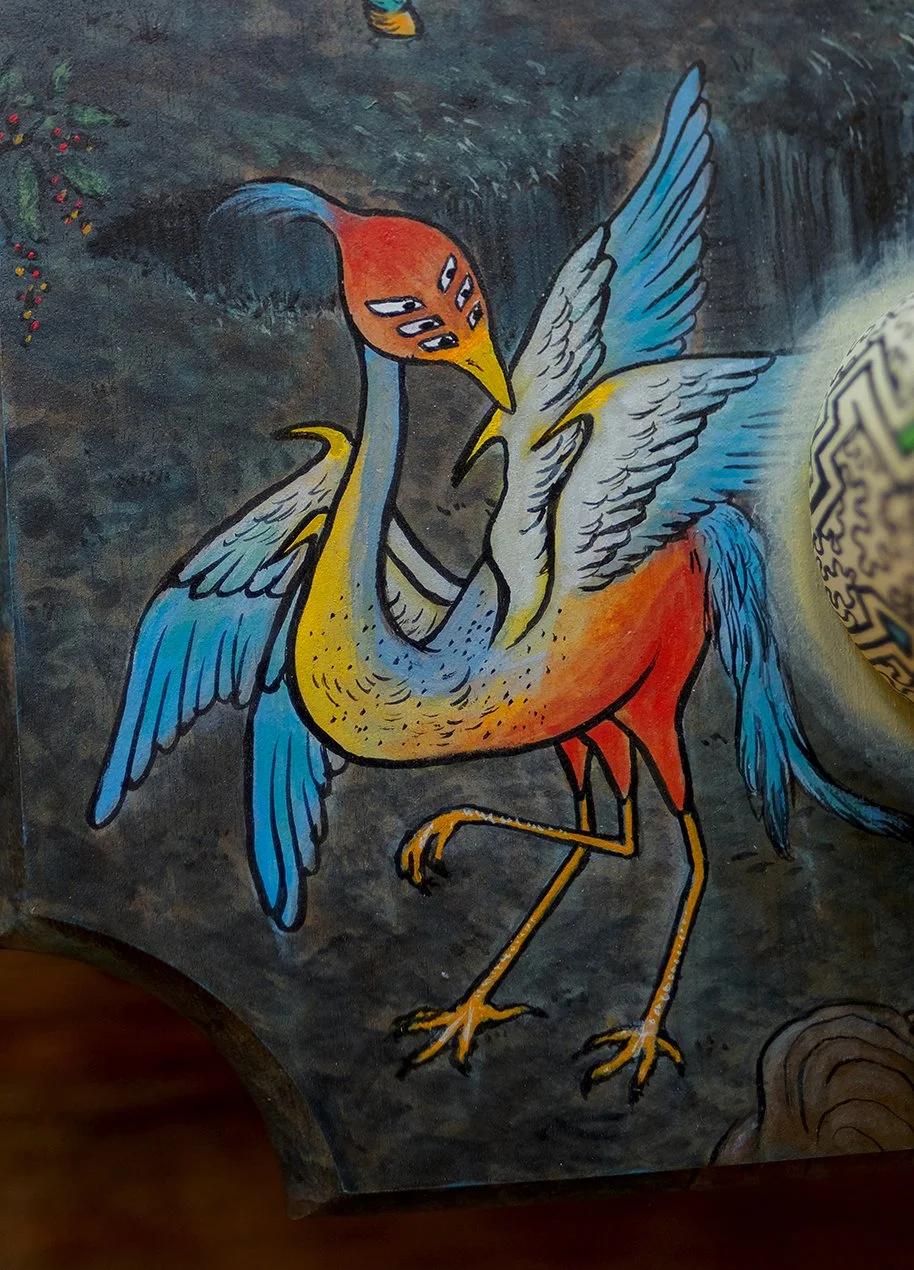
5 Datougui / 大頭鬼 (Large-Headed Sprite): A whimsical, large-headed mountain sprite sitting near the cliff. Completely harmless in nature, it longs to play with the terrifying force Xiangliu, capturing an innocent, childlike curiosity about the darker parts of the psyche.
6 Suān Yǔ / 酸與 ㄙㄨㄢ ㄩˇ (Omen-Bearing Phantom Bird): Eerie bird-like phantom entities. Rather than drifting randomly, one stares intently at a tiny human figure hiding nervously behind a mossy boulder, embodying the weight of collective anxiety and personal guilt.
7 Xiàng Liǔ / 相柳 ㄒㄧㄤˋ ㄌㄧㄡˇ (Nine-Headed Serpentine Menace): A multi-headed serpentine monster coiled near the base among the mossy mountain cliffs. Its curious, gentle human-like heads mask a darker ancient truth: a terrifying presence that poisons the earth and leaves decay in its wake. It stands for corruption, gluttony, and the raw, untamed forces of nature that we must learn to coexist with.
8 Ayahuasca, Chacruna, Ajo Sacha & Mapacho (Amazonian Master Plants): The foundational Amazonian master plants. Ayahuasca, revered in Shipibo-Conibo tradition as Abuelita (the Grandmother spirit), teaches the vast architecture of inner vision, while Chacruna infuses those currents with radiant light and clarity, their roots weaving deeply through the ancient mountain bark and shadows to anchor the entire piece. Though not physically depicted here, Mapacho (Grandfather Tobacco) is felt as a protective guiding teacher used to clear heavy energies, protect ceremony spaces, and anchor spiritual work. Alongside it, Ajo Sacha whispers its teachings through the veil of profound dreams. Together, these unseen allies remind us how true transformation requires both the fierce illumination of waking vision and the quiet, grounding protection of the spirit world.
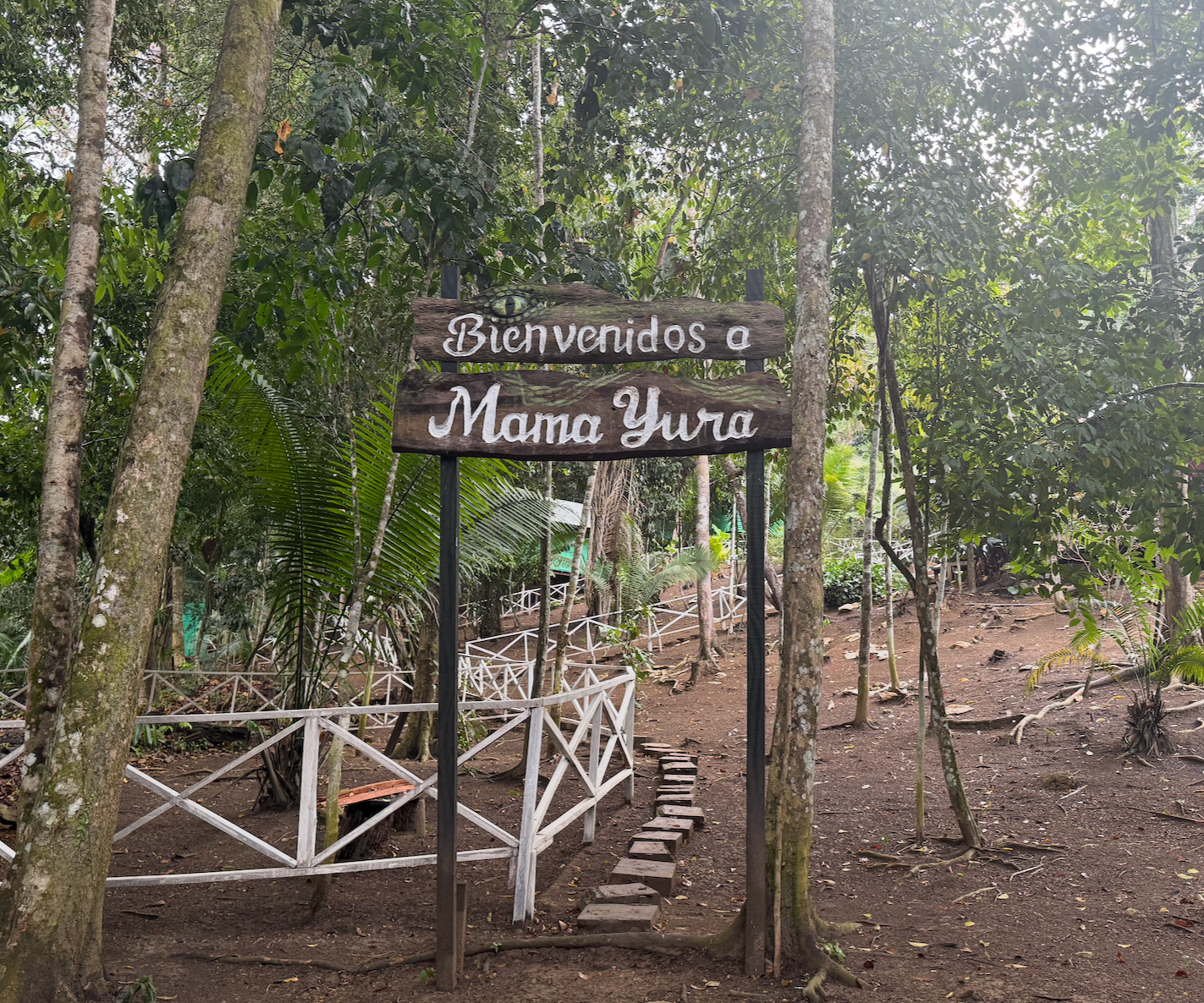
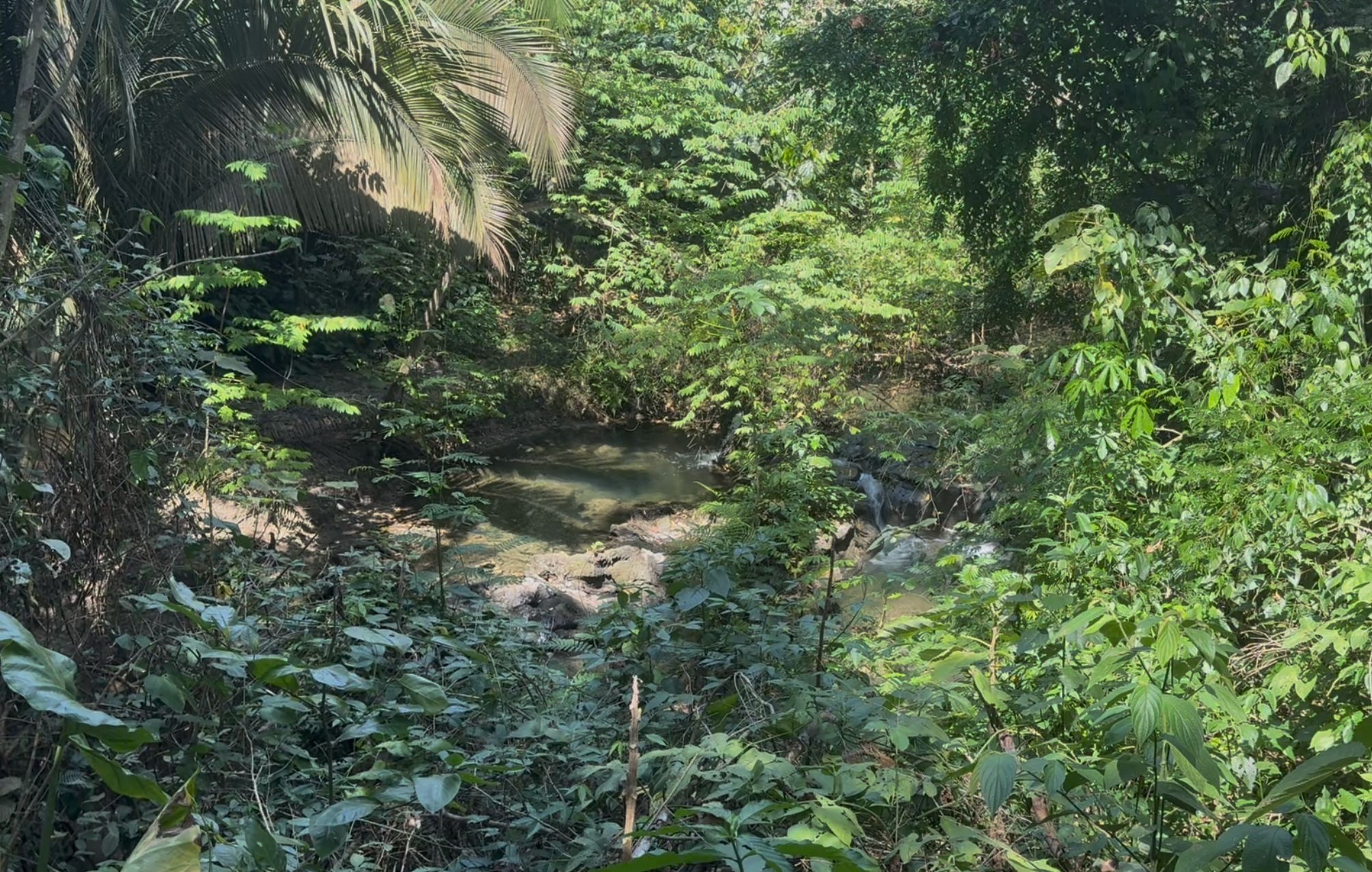
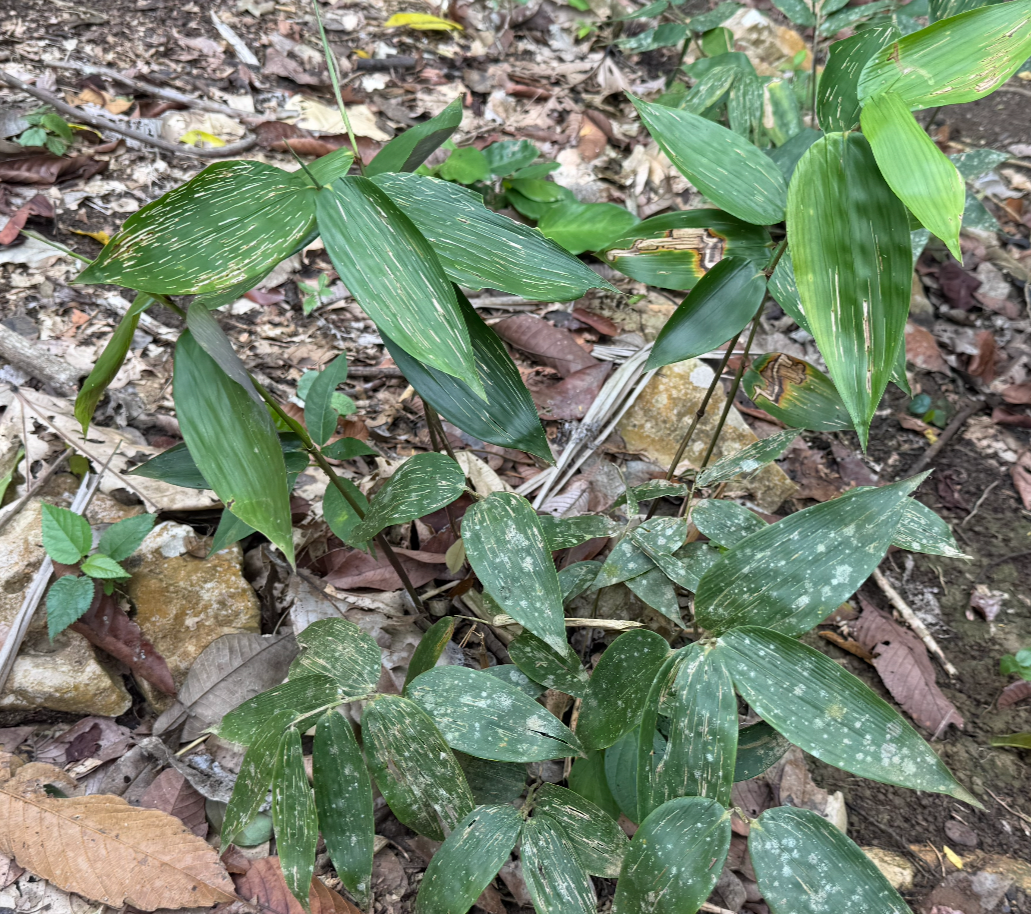
As this work ripples outward into daily life, I offer my deepest gratitude to the unseen teachers and human guides who danced alongside this path. To the plant medicine spirits and the vibrant, living traditions of the Shipibo-Conibo ancestors, thank you for clearing the heavy energies, protecting sacred spaces, and anchoring this healing work. Leaving a part of me in Mama Yura, I hold deep reverence for the land and waters that held me. And to life's profound challenges and tests, thank you for gently pushing me to see whether I can truly embody what I have learned, giving me the courage to keep asking the uncomfortable questions.
References & Academic Resources on Chinese Mythological Literature
For those interested in exploring the classical texts, commentaries, and academic studies that document these mythical beasts, gods, and spirits, the following foundational literature offers deep insight:
The Classic of Mountains and Seas (Shan Hai Jing / 山海經): The pre-Qin dynasty foundational geographic and mythological text recording ancient China's spirits, deities, and anomalous fauna.
Key Scholarly Editions:
Anne Birrell, The Classic of Mountains and Seas (Penguin Classics).
Richard E. Strassberg, A Chinese Bestiary: Strange Creatures from the Guideways through Mountains and Seas (University of California Press).
Mythological Studies & Iconography:
Lihui Yang and Deming An, Handbook of Chinese Mythology (Oxford University Press).